Altarnun — History & Photographs
A village on the River Inny and the church of St Nonna
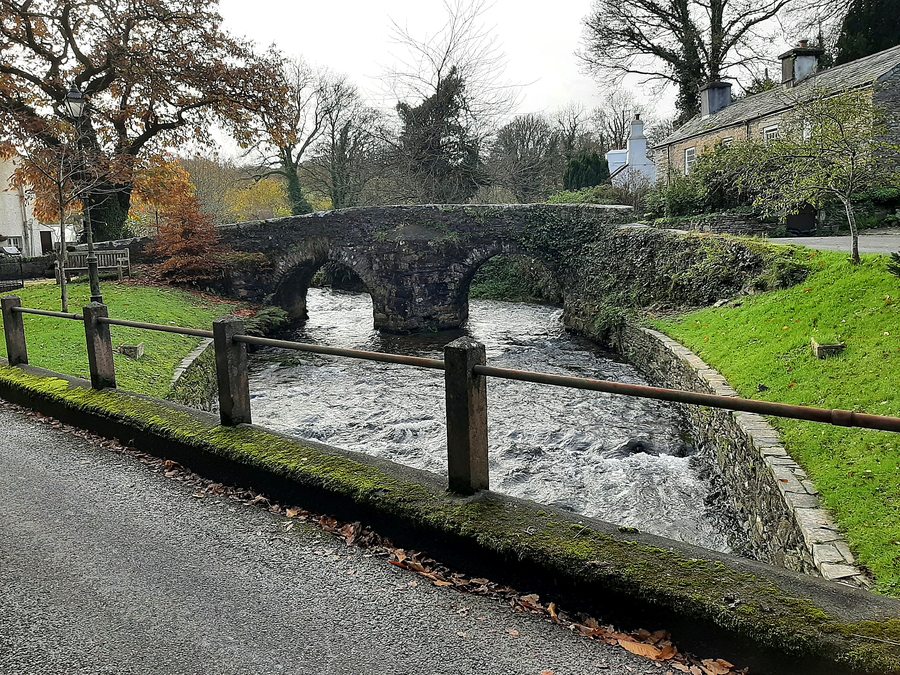
Altarnun and the River Inny
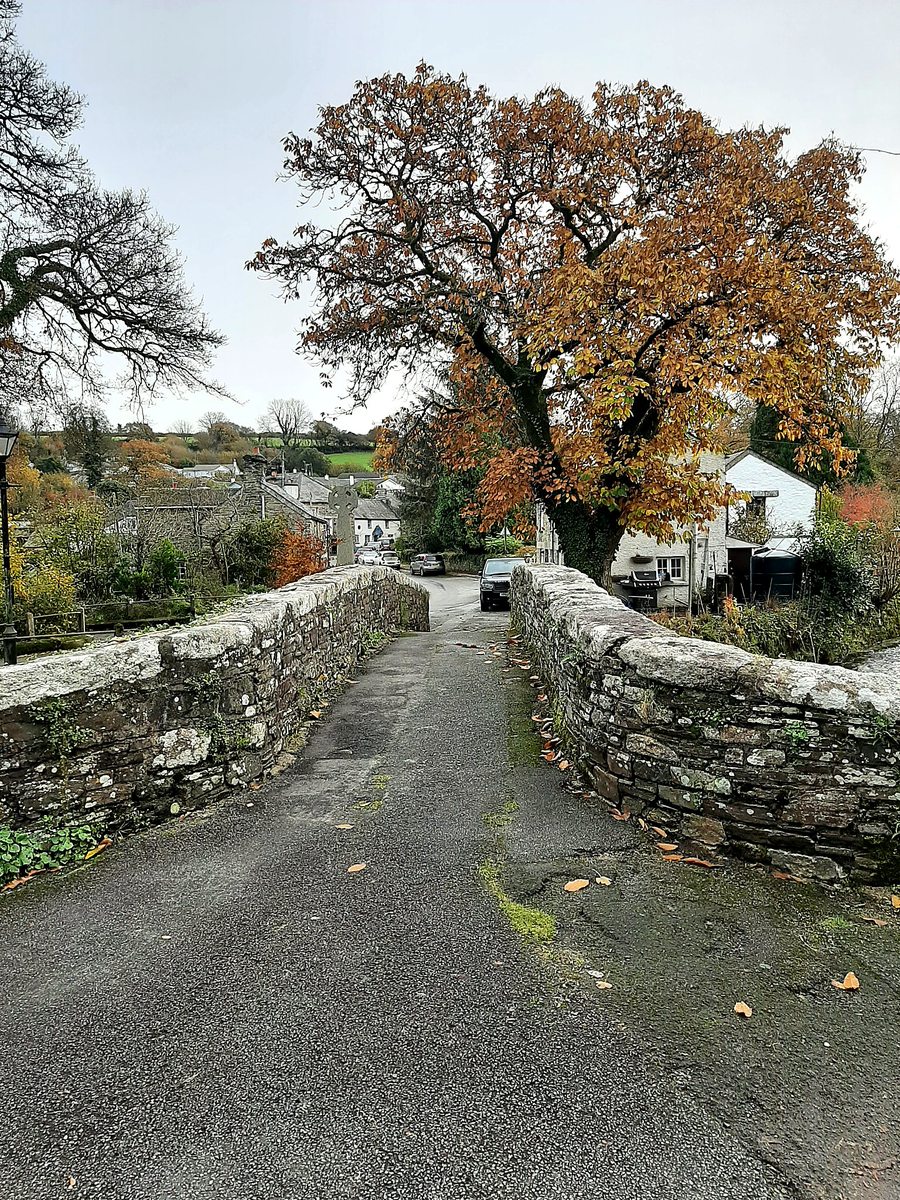
Altarnun developed beside a crossing of the River Inny, in a sheltered valley close to Bodmin Moor. The old stone bridge, its arches and substantial parapets form a conspicuous part of the village scene. Bridges of this kind mattered enormously to local movement: they provided a dependable crossing for people, livestock and goods where streams could become difficult after heavy rain.
St Nonna and the 'Cathedral of the Moor'
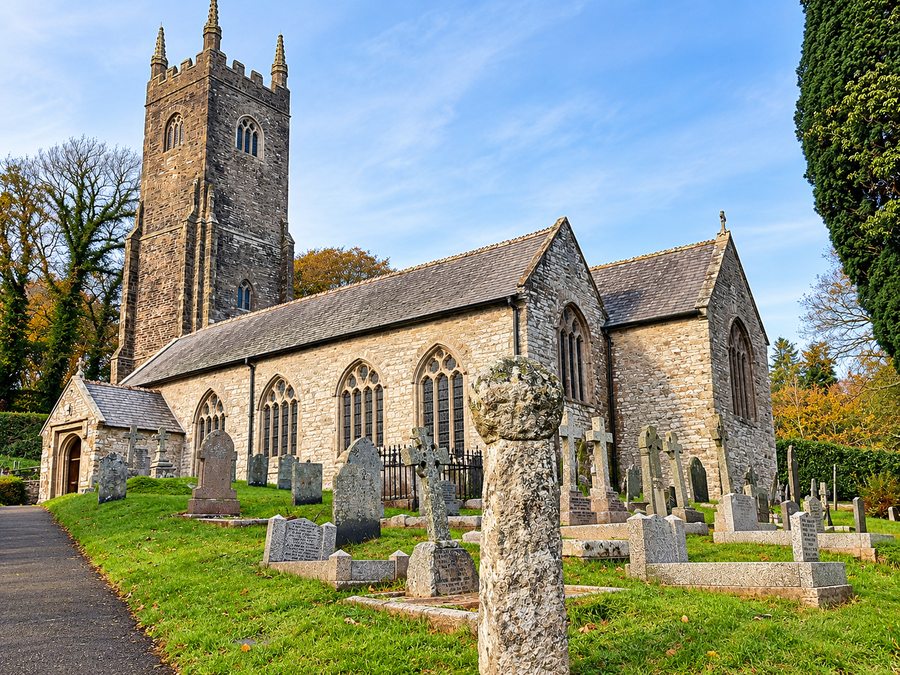
The parish church is dedicated to St Nonna, traditionally associated with St David. Its great size in relation to the village has earned it the familiar description 'Cathedral of the Moor'. Much of the present building reflects the prosperity and religious life of late-medieval Cornwall, when local communities invested heavily in their churches. The tower, granite arcades and timber fittings deserve attention as parts of one long architectural history rather than the product of a single building campaign.
Inside the church
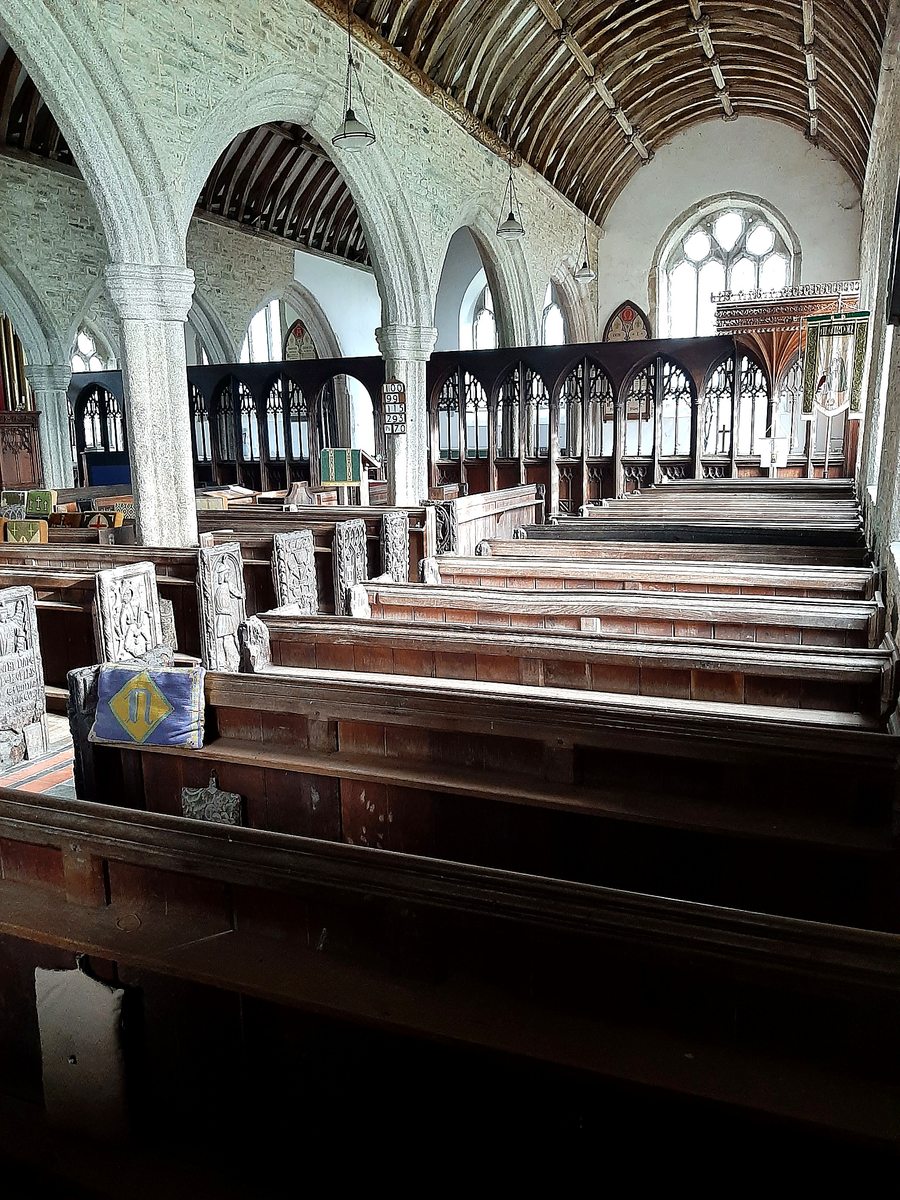
The broad granite arches and columns organise the interior into nave and aisles. Above them, the timber roof gives the building much of its character. A substantial screen separates the principal spaces, while the pews retain a remarkable collection of carved bench ends. Their subjects and workmanship make them especially valuable evidence of local craft and the visual culture of the pre-Reformation parish.
The carved pew ends
Altarnun is particularly celebrated for its medieval carved bench ends. Some bear religious imagery and others decorative patterns or figures. These were not simply ornaments: they belonged to a church in which almost every part of the interior could communicate ideas through images, symbols and craftsmanship. The later kneelers seen in the photographs show how new generations have continued to add their own work to the older woodwork.
The bells and the organ
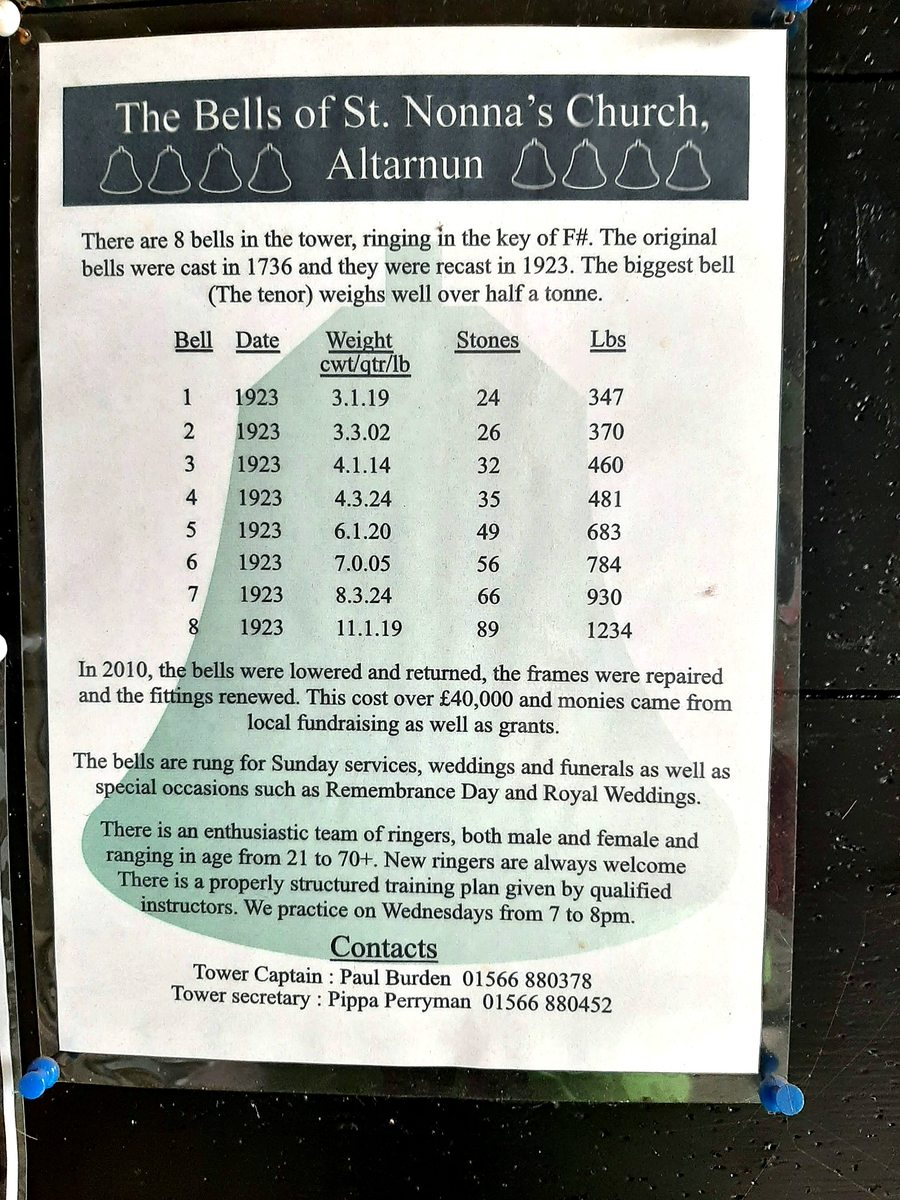
A notice in the church records eight bells, ringing in F sharp. It states that the earlier bells dated from 1736 and were recast in 1923. In 2010 the bells were lowered and retuned, the frames repaired and fittings renewed, at a cost of more than £40,000. Another plaque records that a Heard & Co. organ, formerly in Vogue Beloth Chapel at Illogan, was restored and installed by David Gridley of Madron. It was rededicated on 9 September 2017; the plaque gives the cost of removal and restoration as £36,500.
A place still in use
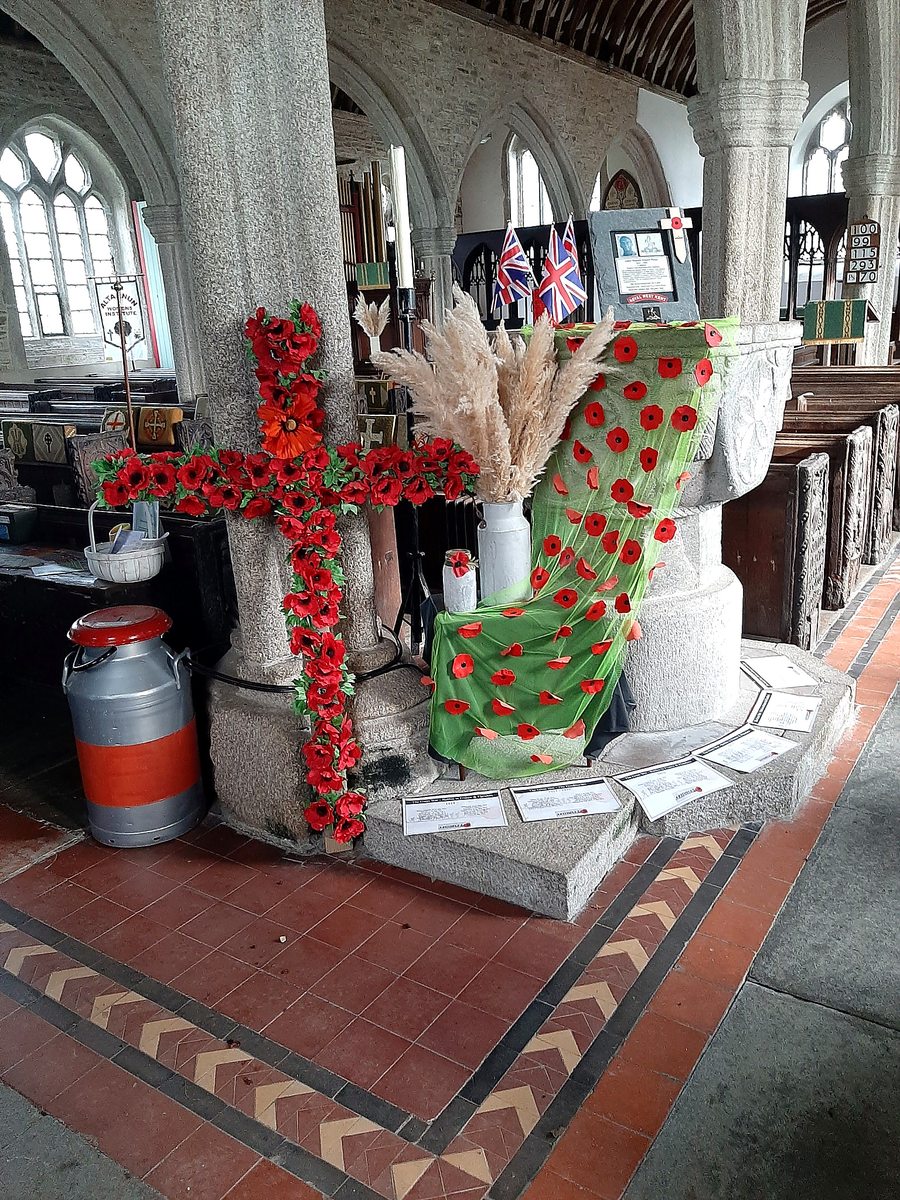
The church is not merely an architectural survival. The memorial display and embroidered kneelers photographed during the visit show a building still shaped by its parish community. A welcome notice describes the site as an early Christian place of prayer and invites visitors to spend time there. Altarnun therefore offers a particularly clear meeting of early Cornish Christian tradition, late-medieval building and present-day parish life.
Sources and further reading
The church notices photographed during the visit provide the dates and figures for the bells and organ. Architectural observations are based on the photographs of the church itself. For a fuller architectural record, consult the Historic England listing for the Church of St Nonna and the Cornwall Historic Environment Record.