Chillaton
Roads, manganese and a changing Devon village
A changing village
Chillaton is a small West Devon village lying between Tavistock and the Tamar. Its present appearance conceals a surprisingly varied history. Agriculture shaped the surrounding countryside, but the village was also affected by improved road transport and, for a period in the nineteenth century, by an important mining industry.
Chillaton has continued to change. Mining has disappeared, road tolls have gone, and services which once formed part of everyday village life have been lost. At the same time new houses have appeared alongside the older buildings. The result is a settlement in which several stages of development can still be seen.
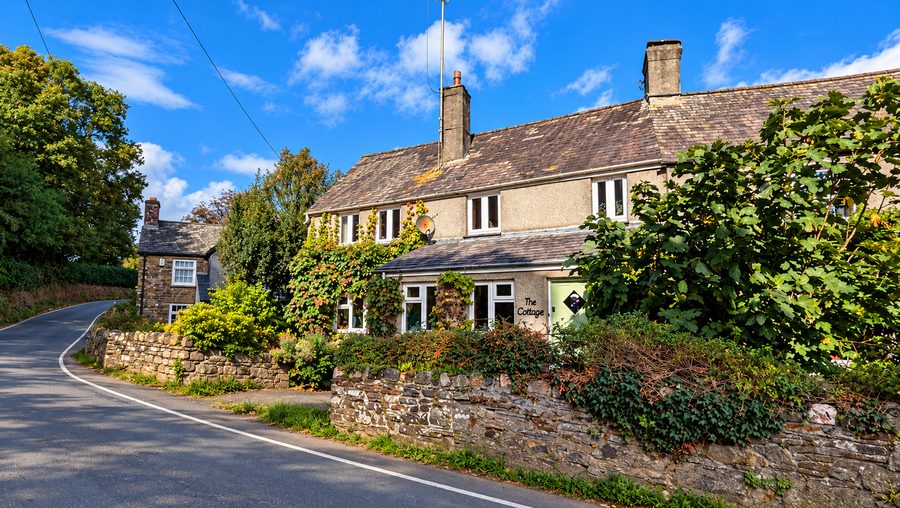
The road and the Toll House
Before responsibility for maintaining roads passed to modern public authorities, many important roads were administered by turnpike trusts. These trusts were authorised by Parliament to improve particular routes and to recover the cost by charging travellers.
The Tavistock–Launceston road formed part of this system. South of Chillaton a toll house was built in the angle of a road junction. The National Transport Trust identifies it as an early nineteenth-century toll house associated with the Tavistock–Launceston road.
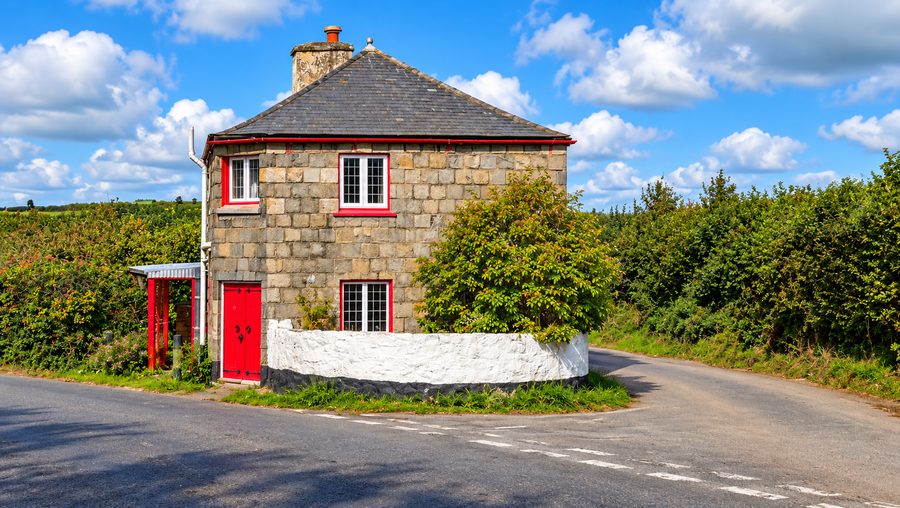
The toll collector lived beside the road and collected payments from those using it. Farmers moving animals, merchants carrying goods and other travellers therefore contributed directly towards the upkeep of the route.
The turnpike system eventually disappeared, but the building remains. Its position still makes sense once its original purpose is understood: the house was placed where the road and the travellers using it could be watched.
Chillaton and Hogstor manganese mine
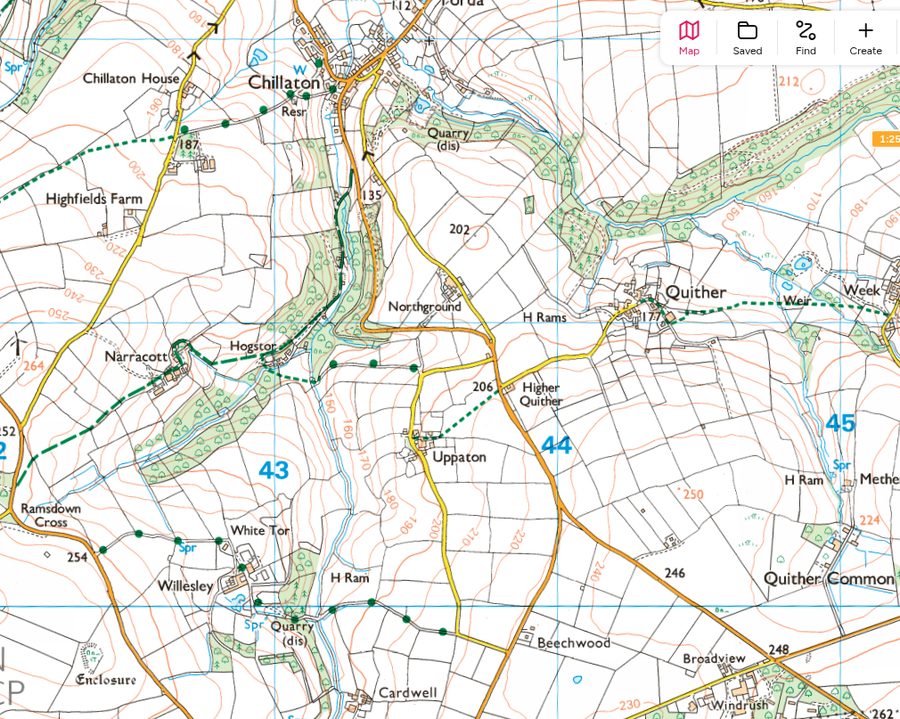
The most unexpected episode in Chillaton's history occurred in the countryside to the south of the village, around Narracott and Hogstor. Here developed the Chillaton and Hogstor manganese mine.
Manganese mining had taken place in Devon from the late eighteenth century. During the nineteenth century the Milton Abbot district became an important producing area, and from the 1840s the Chillaton and Hogstor mine became its dominant operation.
In 1873 its importance was remarkable. According to the Devon Historic Environment Record, the mine produced 97 per cent of all the manganese mined in Britain that year.
Why was manganese important?
Manganese is a chemical element, symbol Mn. It is not particularly rare: it is approximately the twelfth most abundant element in the Earth's crust. What is less common is finding it sufficiently concentrated to make extraction economically worthwhile.
Its principal importance is in the production of iron and steel. Manganese helps remove unwanted oxygen and sulphur during steelmaking and improves the properties of the resulting metal. Around 85–90 per cent of manganese consumption is associated with iron and steel production.
It has other uses, including aluminium alloys, chemicals and batteries. Its use in some modern battery technologies has given manganese renewed importance, but steelmaking remains its principal industrial application.
This explains why a mine near Chillaton could acquire national significance. Nineteenth-century Britain required enormous quantities of iron and steel for railways, machinery, ships, buildings and other products of industrialisation. Manganese was one of the materials needed to make that possible.
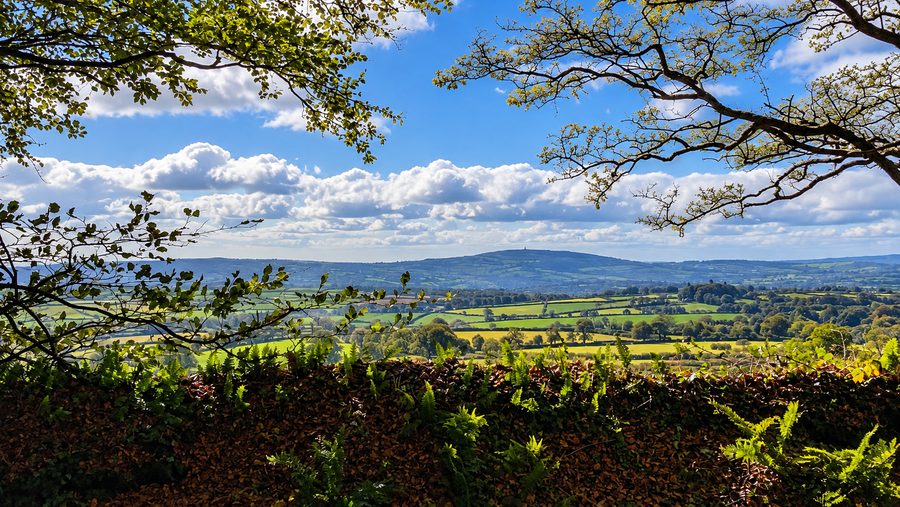
Where does manganese come from today?
Chillaton's period of dominance did not last. Production declined after 1873 as British deposits became less competitive and larger sources of manganese elsewhere supplied the growing international market.
Today the geography of manganese production is very different. The principal producing countries include South Africa, Gabon, Ghana and Australia. South Africa possesses exceptionally large manganese resources and is the world's leading producer.
A mineral which Britain once obtained in remarkable quantities from the countryside around Chillaton is therefore now supplied through a global mining and trading system.
The Chichester Arms and the village centre
Industry and road traffic formed only part of village life. For many years one of Chillaton's principal social institutions was the Chichester Arms, situated prominently at the village junction.
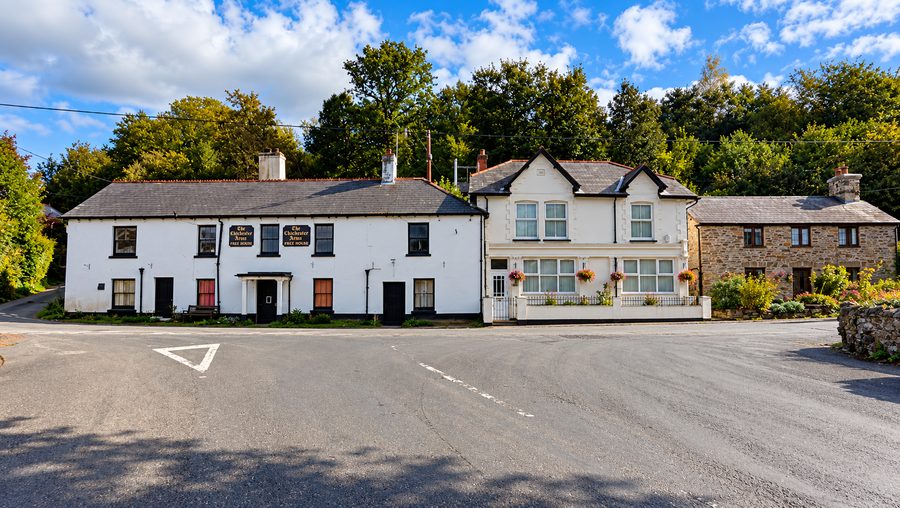
The inn was certainly established by the early twentieth century. The 1911 census records Frederick W. Piper at the Chichester Arms as an innkeeper and horse trainer. The combination is particularly appropriate to a village whose history had been closely connected with road travel.
The origin of the name Chichester Arms has not yet been established with certainty. Chichester was the name of an important Devon family, but without documentary evidence it would be unsafe to assume that the inn was named after them.
The Chichester Arms eventually closed. Planning permission for its conversion to residential use was granted in 2024, leaving Chillaton without a public house.
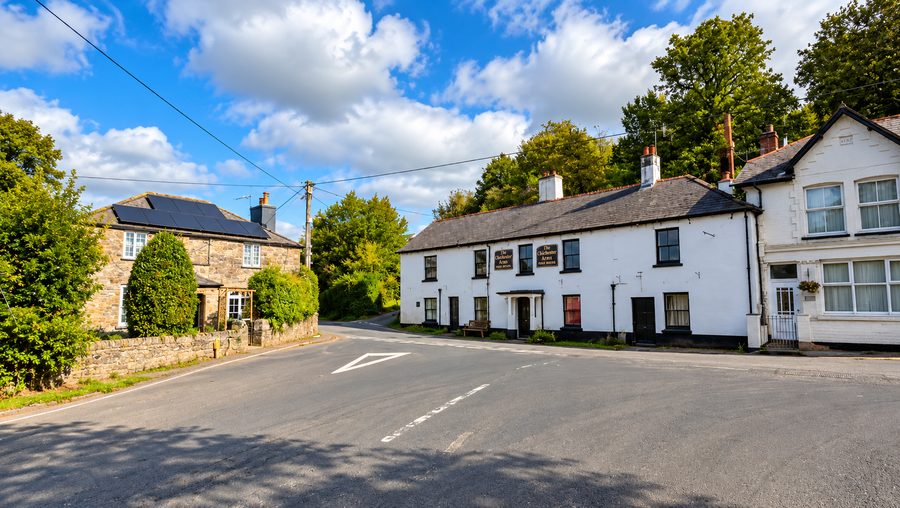
Older records and photographs also show that Chillaton once possessed a village shop and post office. Their disappearance, together with the loss of the pub, illustrates a substantial change in the nature of the settlement. Services which once required residents to meet and conduct their everyday business within the village have moved elsewhere.
The modern development of Chillaton
The loss of older services does not mean that Chillaton has ceased to develop. New housing has become one of the most conspicuous changes in the village.

The contrast between the new houses and the older village buildings shows how Chillaton's function has changed. Earlier generations were more dependent upon employment and services within or near the village. Modern transport allows residents to live in Chillaton while travelling elsewhere for employment, shopping and many other activities.
There is an interesting connection between this development and the history of the road. Improved transport originally brought travellers, trade and tolls through the district. Modern transport has had almost the opposite effect: it has made it possible for people to live in a rural village without depending upon the village itself for most of their daily needs.
Passing through today

For the cyclist passing through Chillaton today, relatively little suggests the scale of the changes which have taken place here. The Toll House survives beside the road, but the toll gate has gone. The manganese industry has disappeared from the landscape. The Chichester Arms has ceased to be a pub, while new houses record the latest stage in the village's development.
The most remarkable fact remains the manganese mine. In 1873 this small part of West Devon was responsible for 97 per cent of Britain's manganese production. Today the same element reaches Britain through a worldwide industry dominated by mines thousands of miles from Devon.
Chillaton therefore provides an unusually compact example of changing rural life: from turnpike roads and horse traffic, through nineteenth-century mining and the traditional village pub, to the increasingly residential community of the present day.
Sources & Further Reading
- Devon Historic Environment Record: Chillaton and Hogstor Manganese Mine, Milton Abbot.
- National Transport Trust: Chillaton Toll House, Devon.
- U.S. Geological Survey: Manganese Statistics and Information and Mineral Commodity Summaries 2026.
- Ordnance Survey mapping of Chillaton, Narracott, Hogstor and White Tor.
- Census, planning and historical records relating to Chillaton and the Chichester Arms.