Kimbolton and the villages — History & Photographs
Read comments / Join the discussion ↓
Newton Bromswold · Yelden · Pertenhall · Kimbolton · Upper Dean
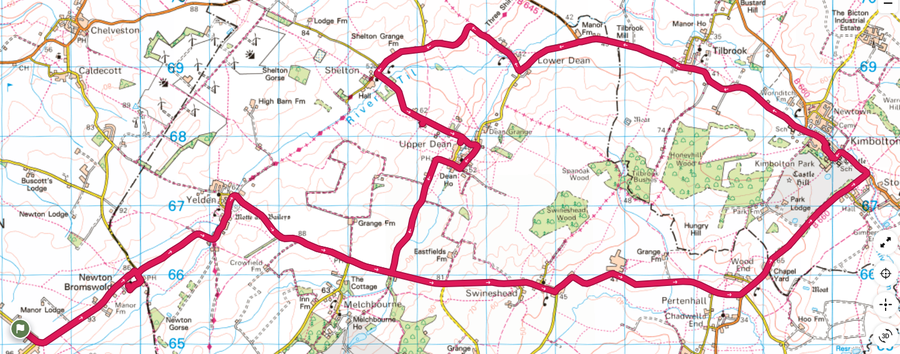
The route
Newton Bromswold
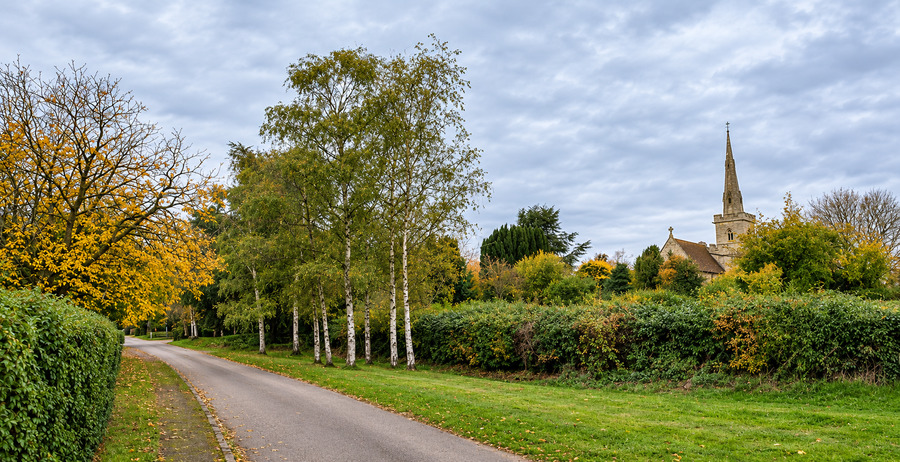
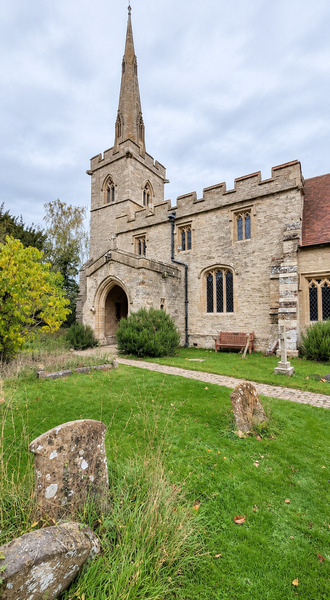
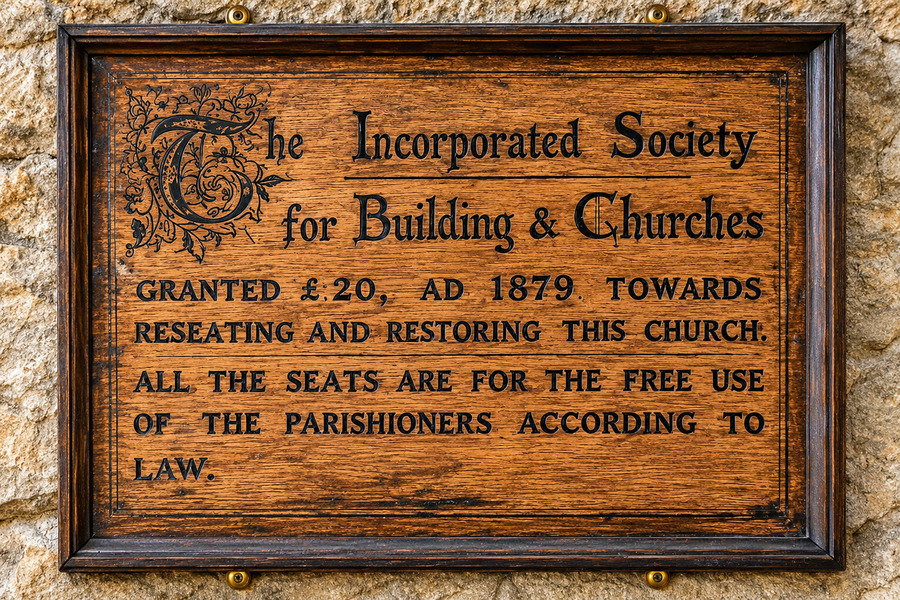
The village church of St Peter has a particularly revealing inscription: a grant of £20 made in 1879 by the Incorporated Society for Promoting the Enlargement, Building and Repairing of Churches was conditional upon seating being free to parishioners. In the nineteenth century, when pew rents and reserved seats were widespread, this was a practical question of who was entitled to worship without payment.
Yelden
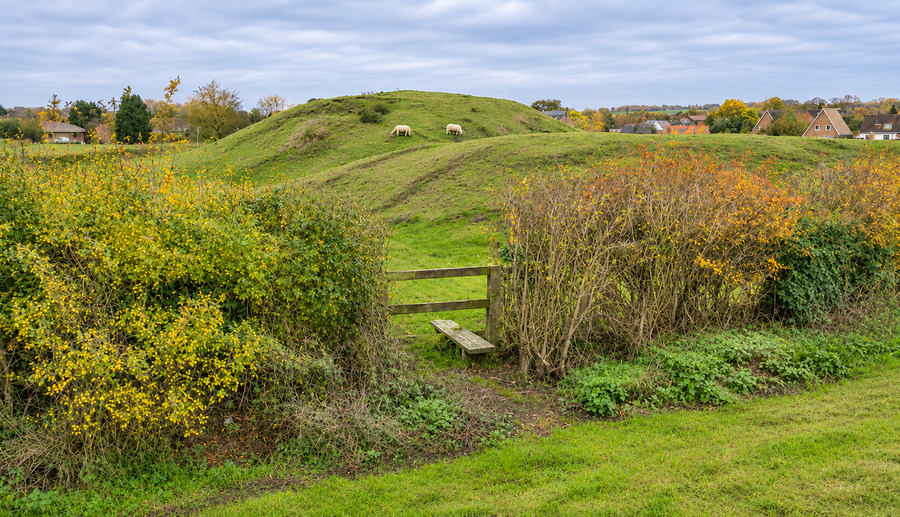
The earthworks at Yelden mark the site of a Norman motte-and-bailey castle associated with the de Trailly family. Henry II's accounts for 1173–74 record expenditure on its garrison during a period of rebellion. By the fourteenth century the castle was ruinous; its earth banks, rather than its buildings, are what remain.
On 24 March 1944 a B-17 Flying Fortress crashed in the village after taking off from RAF Chelveston. Ten airmen and eleven people on the ground were killed, an exceptionally severe loss for a small community.
Pertenhall
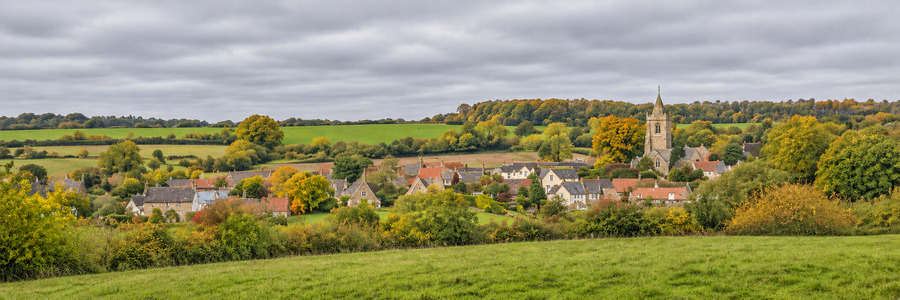
Pertenhall was recorded in the Domesday survey of 1086. Its parish church, St Peter’s, has Norman origins; the north aisle was added around 1190. The village's later history also reflects agricultural change: an Enclosure Act was passed in 1796, altering the pattern of landholding and cultivation.
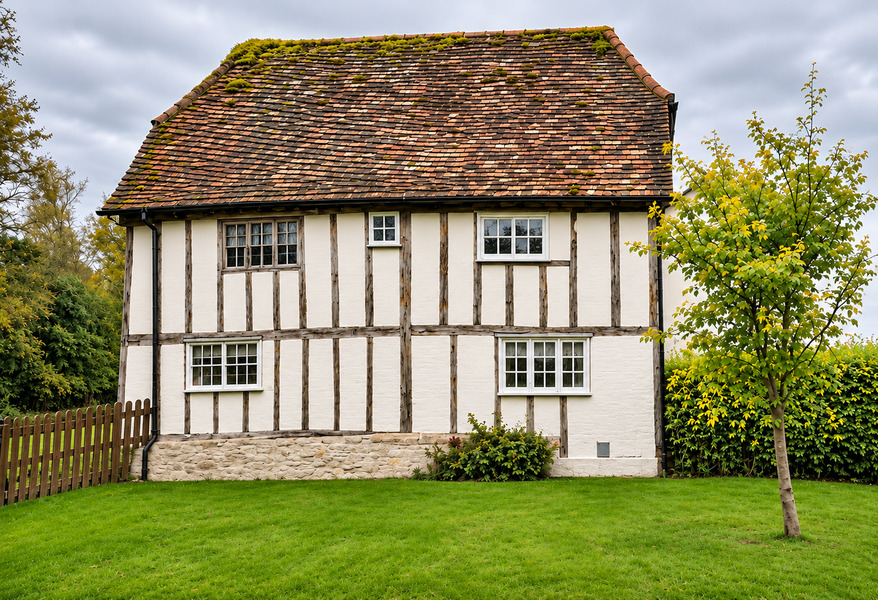
The old timber-framed house illustrates construction in which a load-bearing wooden skeleton supports infill panels. Many older rural houses have relatively small windows because glass was costly, openings lost heat and large apertures were harder to support. The window tax of 1696–1851 also encouraged some later owners to reduce or block openings, though it does not explain the original medieval design.
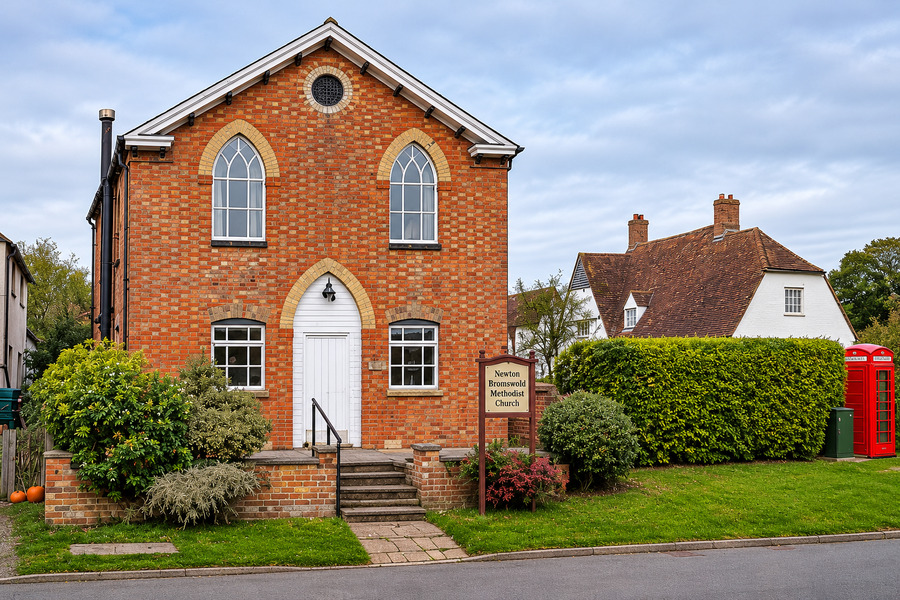
Pertenhall had a Moravian chapel built in 1823, although Bedfordshire's local-history timeline records its demolition in 1976. The photographed building labelled “Old Chapel” should not be identified as that demolished chapel without further evidence.
Kimbolton: market town, castle and church
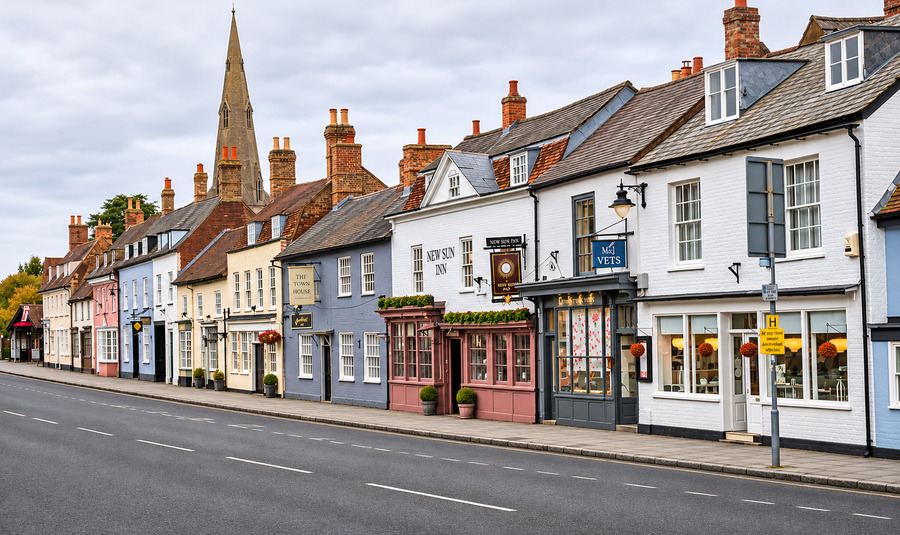
In 1200 King John granted Geoffrey Fitzpiers, Earl of Essex, a charter for a market and annual fair. The broad High Street is associated with the planned medieval market town that developed beside the castle.
Kimbolton Castle is remembered above all as the last residence of Catherine of Aragon. Henry VIII's first wife was sent there in 1534, separated from her daughter Mary, and died on 7 January 1536. The present building largely reflects later rebuilding under the Montagu family, with work associated with John Vanbrugh, Nicholas Hawksmoor and Robert Adam. In 1950 the estate passed from the Dukes of Manchester to Kimbolton School.
St Andrew’s Church, Kimbolton
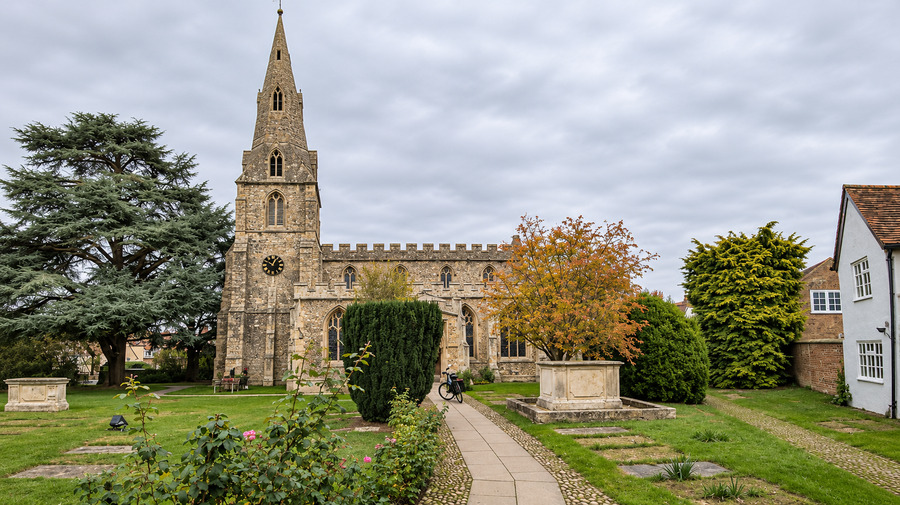
St Andrew’s is recorded in the Domesday Book of 1086. Its thirteenth-century nave arcades, fourteenth-century tower and spire, and fifteenth-century roofs and screens record successive phases of medieval enlargement. The church's connections with Kimbolton Castle are particularly visible in the Montagu monuments and the former ducal pew.
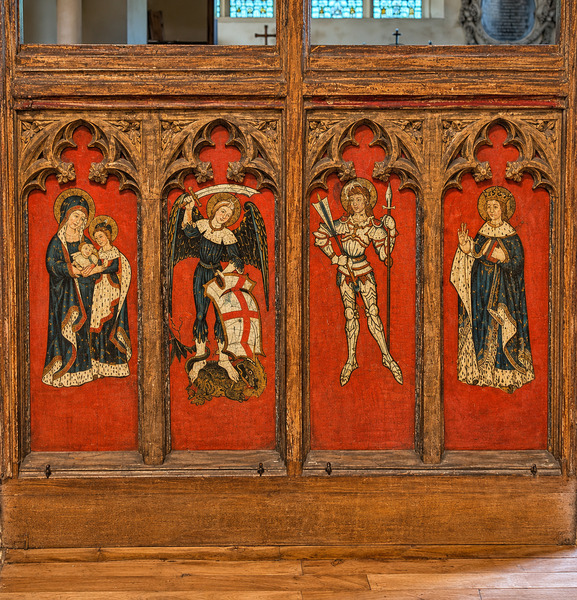
The painted screen in the south aisle was concealed beneath brown paint until restoration revealed fifteenth-century images: St Anne teaching the Virgin Mary to read, St Michael defeating the dragon, St Edmund and Edward the Confessor. The images survived the religious upheavals that destroyed many other English medieval church paintings.
The south chapel contains the celebrated Tiffany memorial window, designed by Frederick Wilson for Tiffany Studios in New York. Commissioned in 1900 by Consuelo Yznaga, Duchess of Manchester, it was installed in February 1902 in memory of her twin daughters Jacqueline Mary Alva Montagu (1879–1895) and Alice Eleanor Louise Montagu (1879–1900). The girls kneel before Christ in a scene of blessing. Unlike conventional stained glass, in which much of the modelling is painted on coloured panes, Tiffany’s opalescent glass combines colours and textures within the glass, giving the figures and their surroundings a luminous, almost smoky depth. It is the only known Tiffany window in an English church—not the only Tiffany glass in Britain. The window was designed by Wilson and made by Tiffany Studios, rather than personally executed by Louis Comfort Tiffany.

St Andrew’s glazing represents different periods: the parish records two nineteenth-century memorial windows, one depicting the Resurrection and commemorating the Revd Thomas Ainsworth, the other the Good Samaritan and commemorating Dr Joseph Hughes Hemming. A small fragment of older stained glass also survives. The precise designers of those two Victorian windows are not established in the parish account; they should not be confused with the Tiffany commission.
Upper Dean
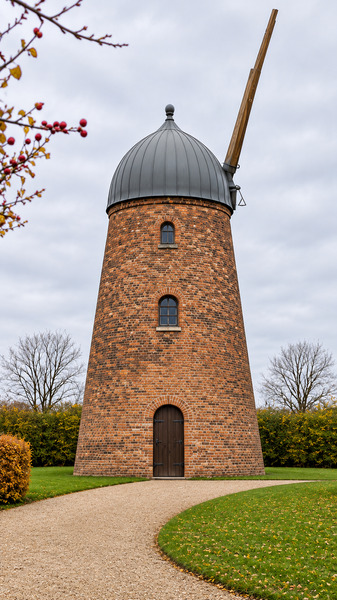
Upper Dean’s tower windmill was built around 1850 for William N. Bliss, although a mill is documented in the manor as early as 1610 and appears on a map of 1765. The brick tower stands about 46 feet high. The mill last worked in 1906, when Charles Hall was miller. By the 1980s its cap had disappeared; a replacement was subsequently fitted. The building is Grade II listed.
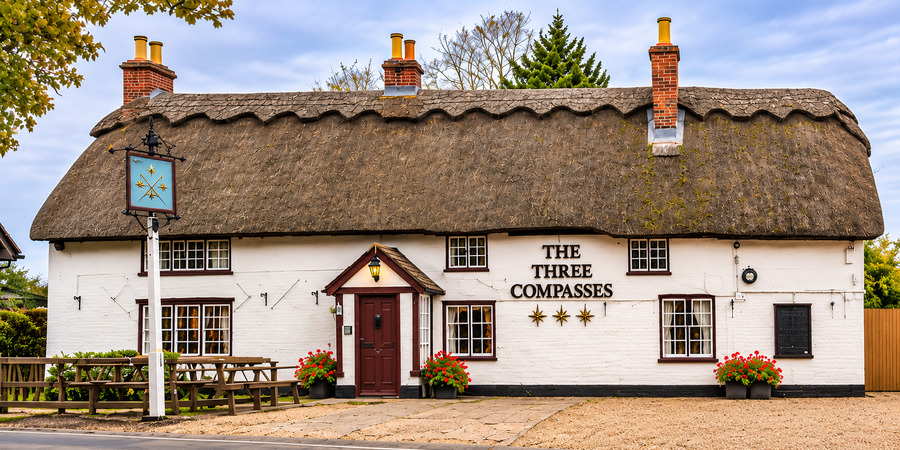
The thatched Three Compasses public house is a reminder of the role of village inns as places for travellers and local residents to meet.
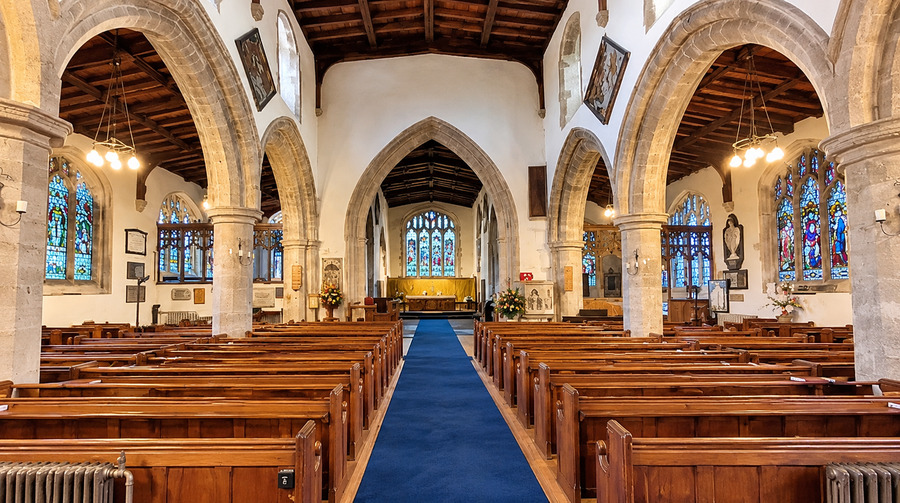
Inside St Andrew’s Church, Kimbolton
The nave preserves thirteenth-century arcades and a fifteenth-century roof. The chapel screens and stained glass reveal how worship and patronage changed over the centuries, while the monuments connect the parish with the powerful Montagu family at Kimbolton Castle.
Anne, Lady Mandeville, and the coming of the Civil War
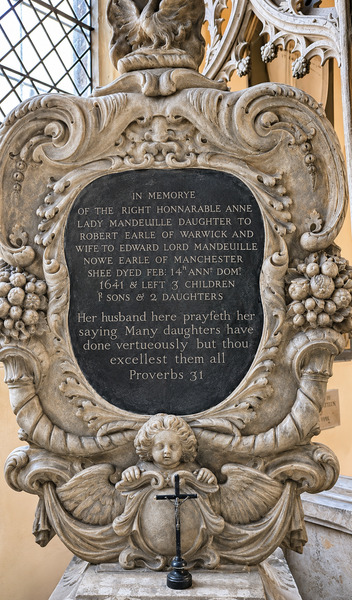
The elaborate monument photographed here is to Anne Rich, Lady Mandeville, daughter of Robert Rich, Earl of Warwick, and wife of Edward Montagu, Lord Mandeville, later 2nd Earl of Manchester. Her inscription records her death on 14 February 1641 in the contemporary English dating convention (February 1642 by the modern year reckoning). It also praises her as a wife and mother, invoking Proverbs 31.
The marriage linked the Montagus, owners of Kimbolton Castle, with the Rich family, both prominent in the political and religious struggles of Charles I's reign. Within months of Anne’s death the Civil War began. Her husband became commander of Parliament’s Eastern Association army, under whom Oliver Cromwell served. Thus the memorial connects a family bereavement with one of the most consequential episodes in seventeenth-century English history.
Other memorials and stained glass
St Andrew’s south chapel contains the monument of Sir Henry Montagu, 1st Earl of Manchester (died 1642), a lawyer and senior royal official who bought Kimbolton Castle in 1615. He established the family's long association with the town. Other monuments commemorate members of the Montagu household, including Essex, Countess of Manchester (died 1658). The south aisle also preserves windows commemorating the Revd Thomas Ainsworth and Dr Joseph Hughes Hemming, depicting the Resurrection and the Good Samaritan.
Sources and further reading
Kimbolton School, History of the School; Independent Schools Yearbook; Debrett's 2025 A-level table; The Good Schools Guide.
St Andrew’s Church, Kimbolton: parish history and church guide (medieval screen, monuments and Tiffany window).
Kimbolton & Stonely Parish Council: The History (market charter, castle, school, fireworks and local history).
Historic England: Church of St Andrew, listing 1210885 (architecture and monuments).
Bedfordshire Archives: Yelden Castle; Yelden timeline (castle and 1944 air crash).
Kimbolton Fireworks: company brochure (Ron Lancaster and displays).
Bedfordshire Archives: Upper Dean Windmill (1850 construction, millers and 1906 closure); Bedfordshire Libraries: Pertenhall timeline (enclosure and Moravian chapel).
Visit Stained Glass: Tiffany window; Kimbolton School: official history.
Tiffany Census: Kimbolton memorial window; Wikimedia Commons photograph and licence
