Postbridge, Bovey Tracey and Lustleigh
Crossing Dartmoor through more than a thousand years of history
The historical interest of this ride is not confined to one village or one period. Postbridge, Bovey Tracey and Lustleigh preserve three very different kinds of evidence: a route across Dartmoor, fragments of a medieval religious establishment, and an inscribed memorial from the centuries immediately after Roman Britain. Seen together, they show how much history can survive in objects which were created for practical purposes rather than for modern visitors.
Postbridge: why build a bridge here?
The famous clapper bridge at Postbridge is sometimes presented as though it belonged to prehistoric Dartmoor. It does not. Historic England describes clapper bridges as a medieval and later form, used by pedestrians and packhorse traffic, and the Devon Historic Environment Record places the Postbridge crossing on an old route between Exeter and Tavistock.
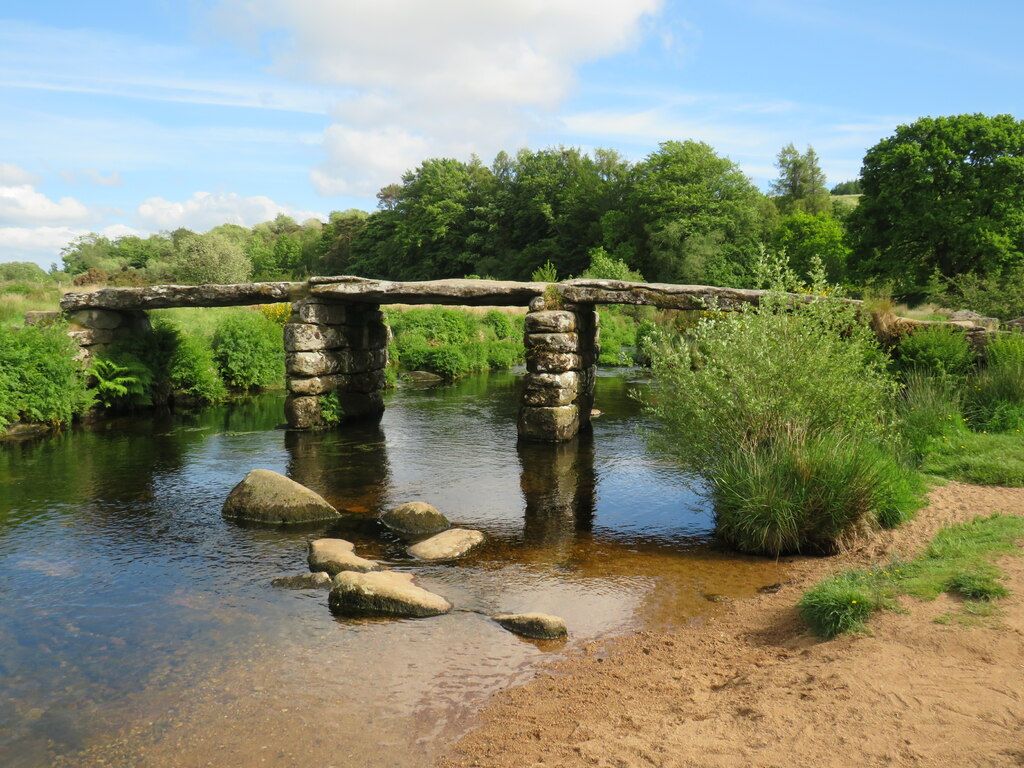
Its construction is strikingly direct. Huge granite slabs span two dry-stone piers standing in the East Dart. No arch was required: Dartmoor supplied stone large enough to bridge the gaps. The crossing was important because the river had to be negotiated by people, animals and goods moving across the moor.
The bridge also warns against assuming that an ancient-looking structure has remained unchanged. It was reported to be in decay in 1670, and Historic England considers that much of the surviving fabric may result from later repair. Nearby stepping stones and the later road bridge record other solutions to the same problem of crossing the East Dart.
Bovey Tracey: Cromwell’s Arch without Cromwell
The name Cromwell’s Arch invites a Civil War story. Oliver Cromwell was indeed involved in fighting at Bovey Tracey in 1646, but the arch is fifteenth-century and therefore predates him by roughly two centuries. Its popular name has obscured a more interesting question: what did the arch originally belong to?
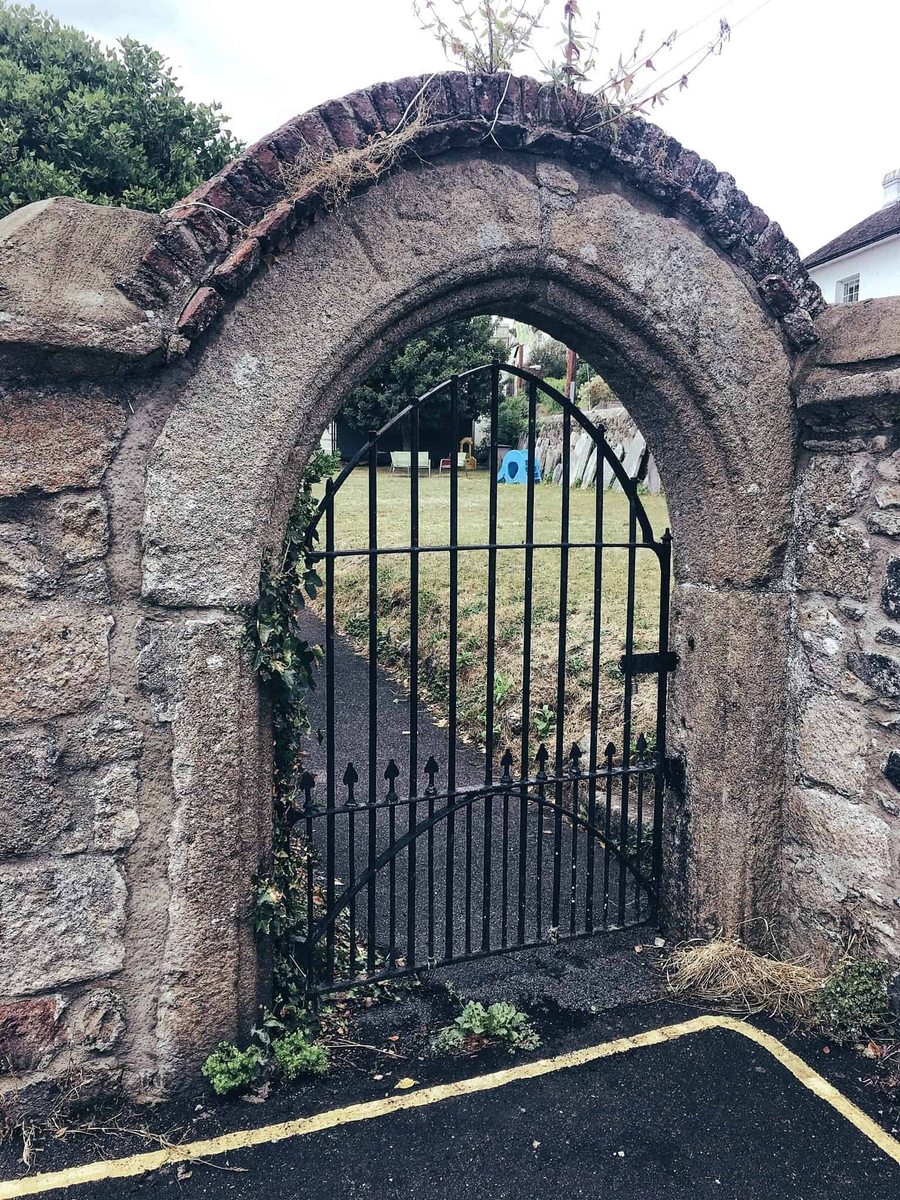
Historic England records two surviving medieval arches in Abbey Road. They appear to be remnants of a religious foundation, but the precise nature of that establishment is uncertain. A traditional claim that the larger arch belonged to a monastery cannot be demonstrated. The scheduled-monument record suggests a possible association with a hospital or with Indio Priory, while carefully stopping short of certainty.
A chapel survived on the site until 1822, when it was demolished and a Baptist chapel was built. The arches therefore matter partly because so much else disappeared. They are fragments from which the medieval use of the site has to be reconstructed rather than a complete building whose purpose is obvious.
Lustleigh before the medieval village

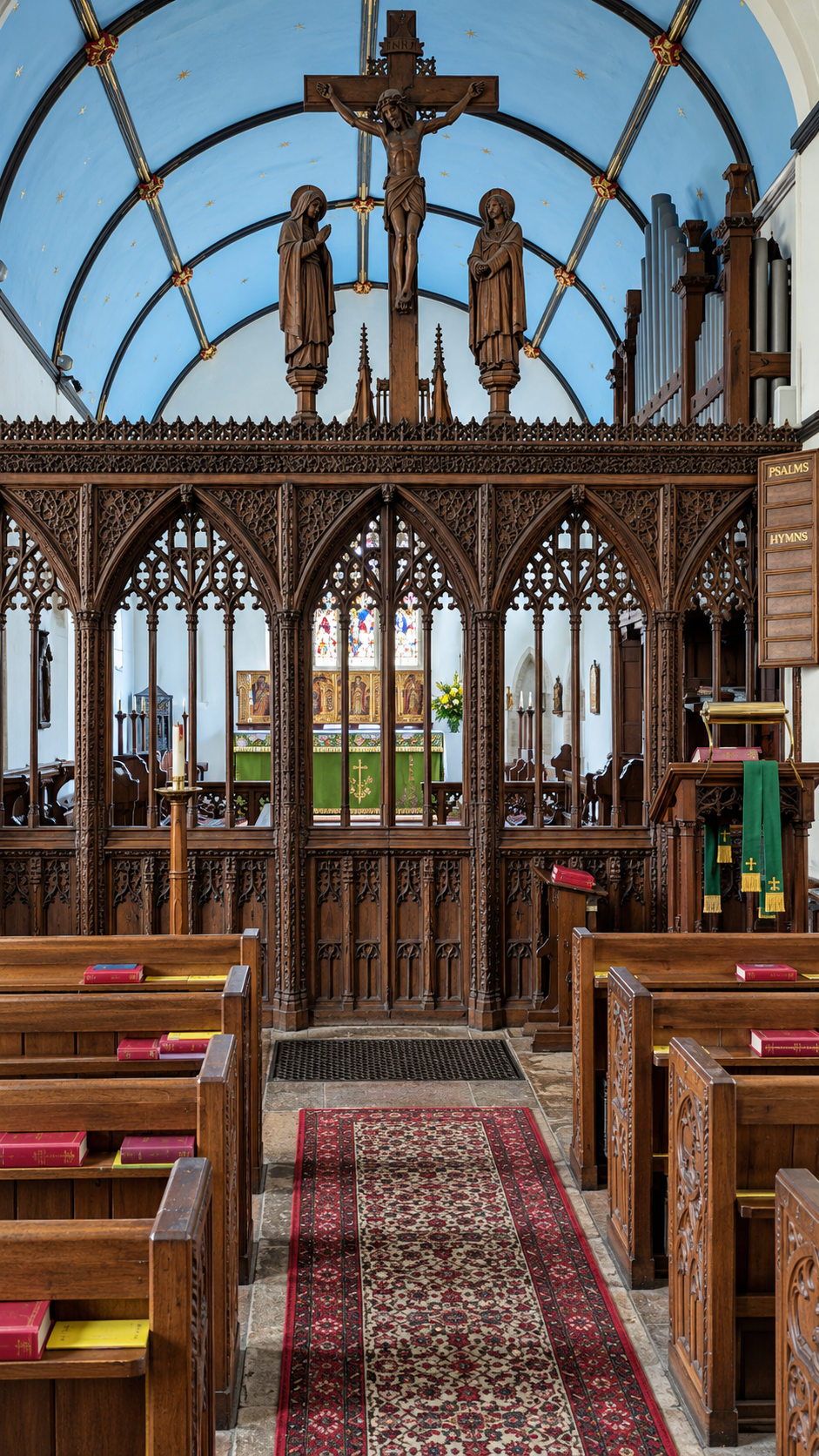
Lustleigh provides evidence of a very different order. The parish church of St John the Baptist is medieval, but the site appears to have been important long before the present building existed. Research by the Lustleigh Society points to the churchyard's circular enclosure and, above all, to the inscribed stone now kept inside the church.

Datuidoc: a name from post-Roman Devon
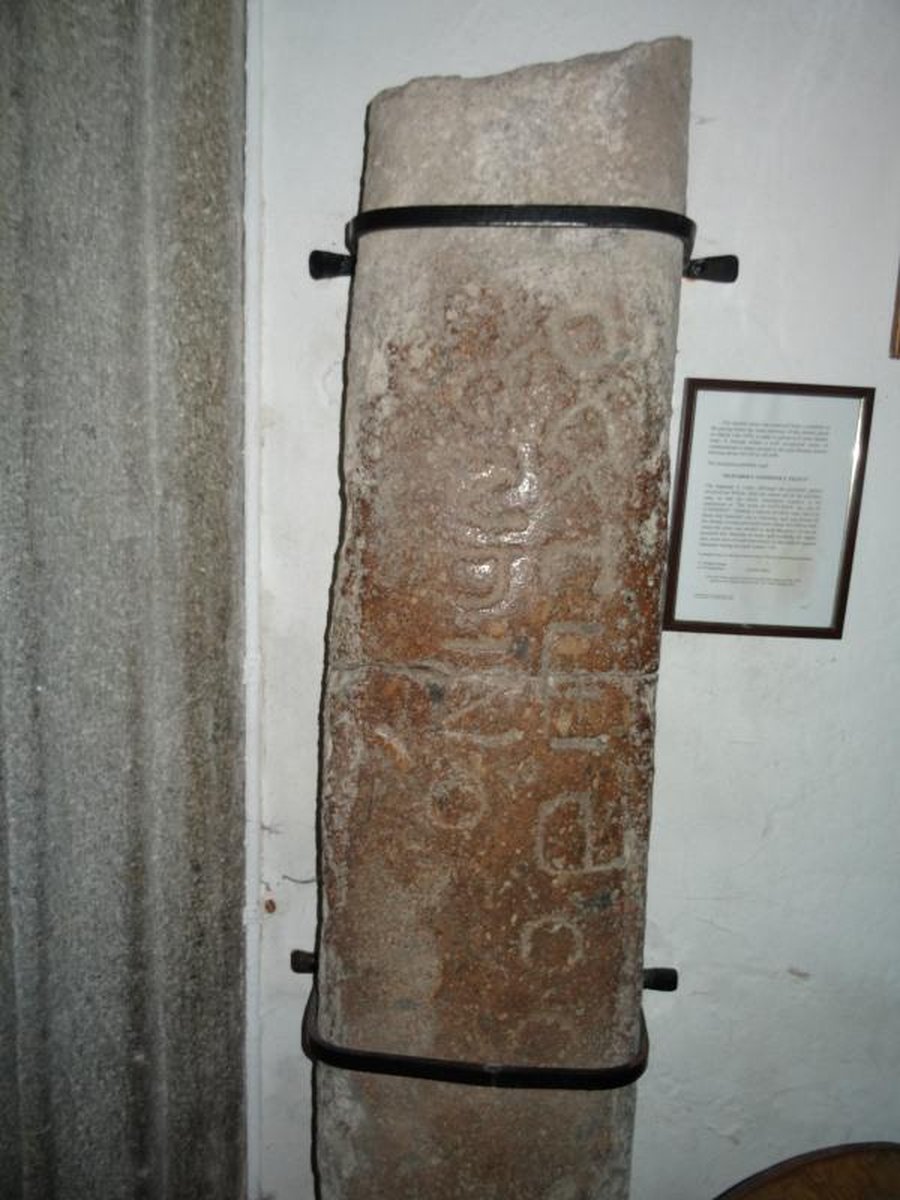
The Datuidoc Stone, generally dated to about AD 550–600, is remarkable because it gives a name to someone who lived in a period from which local written evidence is extremely sparse. Its Latin inscription commemorates Datuidoc, son of Conhinoc.
The importance of the stone lies less in what it tells us about Datuidoc — almost nothing else is known about him — than in the world implied by the inscription. Christianity was established in the South West, Latin still had a formal commemorative role, and Brittonic personal names survived in a society developing after the end of Roman administration.
At some later stage the stone lost its original function and was reused in the church, eventually serving as part of a doorway or threshold before its significance was recognised and it was moved inside for protection. Its survival is therefore partly accidental. A sixth-century memorial became ordinary building material and only much later became a historical object.
Wreyland: history that remained in use

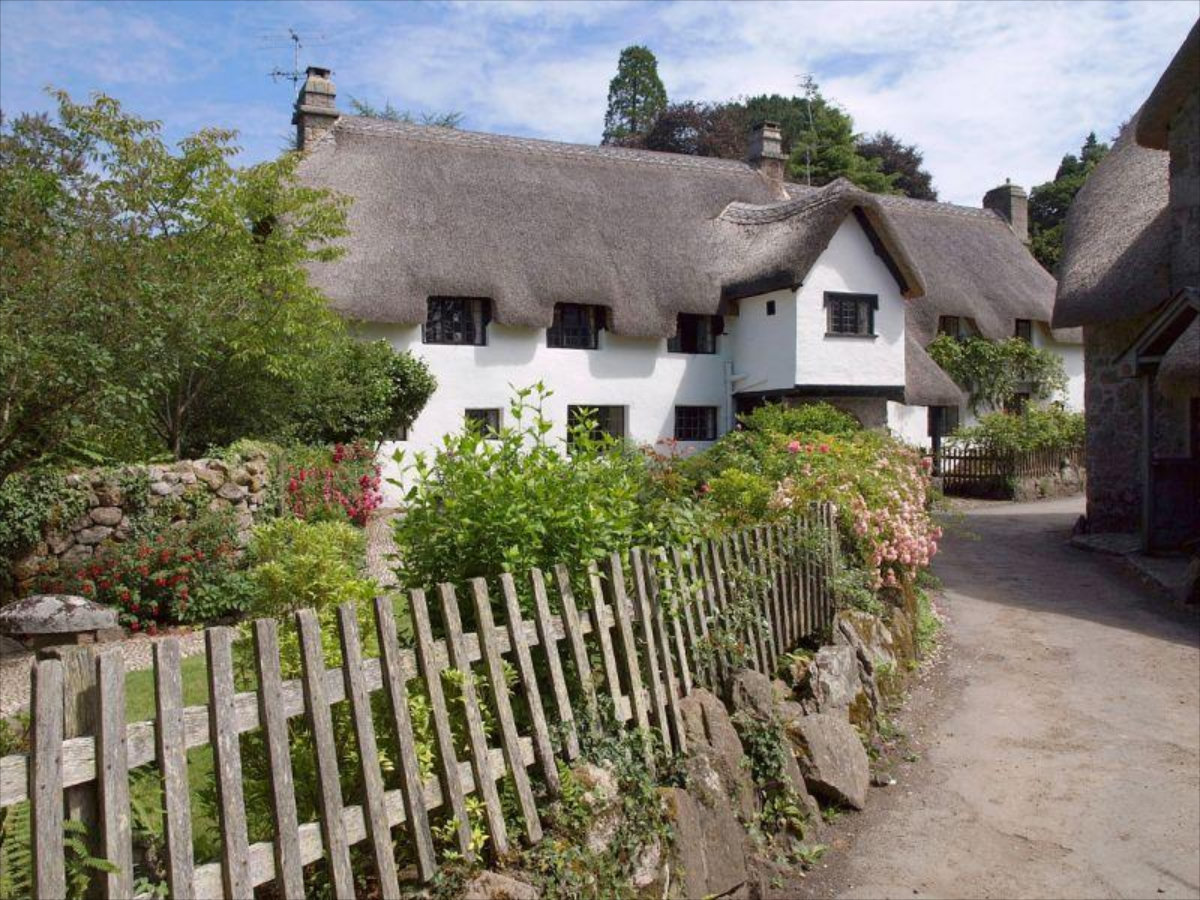
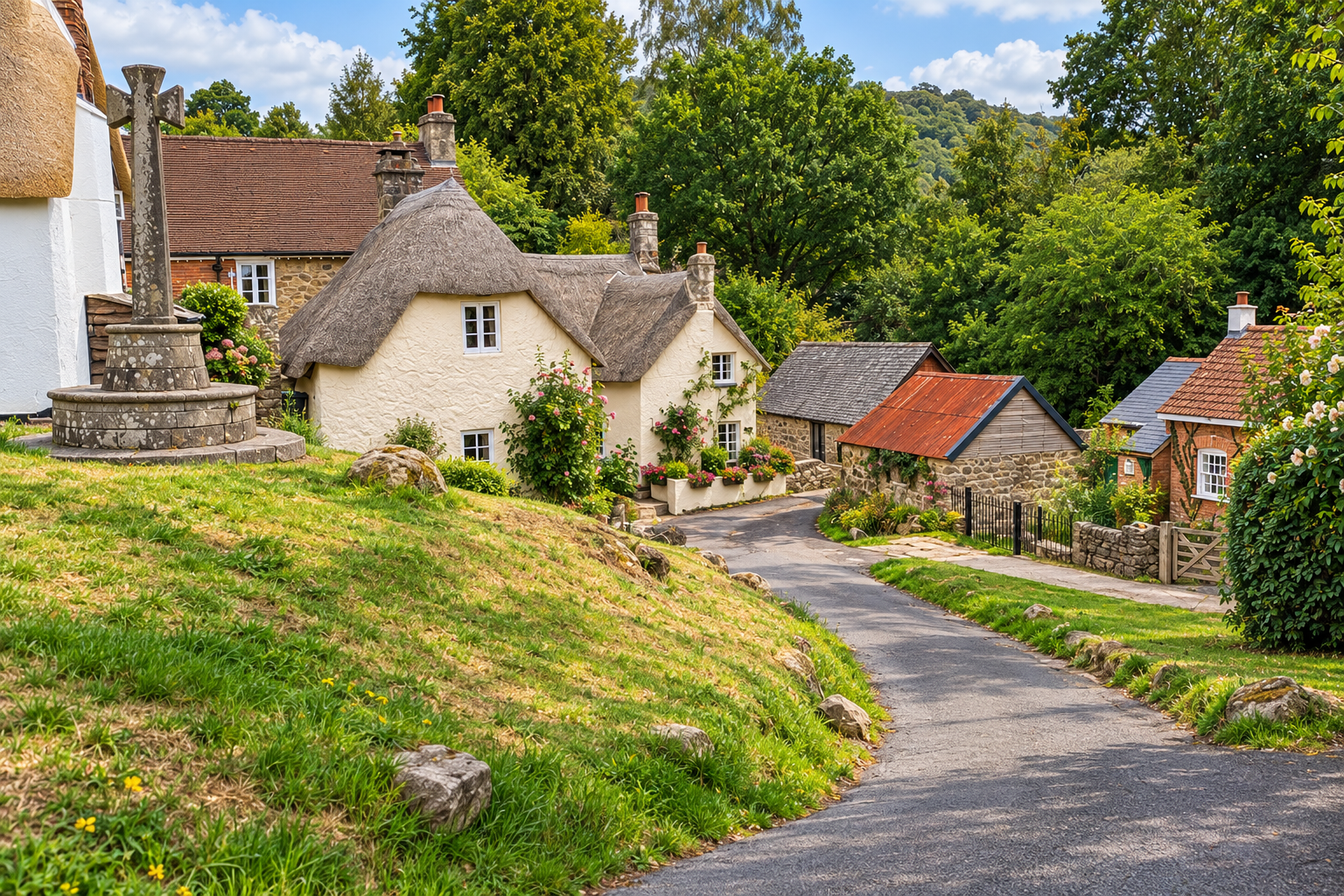
The cottages of Lustleigh and nearby Wreyland represent another kind of continuity. Wreyland Manor is substantially sixteenth-century and was restored in the early twentieth century by Cecil Torr. Around it, thatched roofs, granite walls and old lanes preserve the scale and arrangement of a settlement built up over generations.
This domestic landscape is easy to undervalue beside an inscribed stone or medieval church. Yet it shows how history normally survives: buildings are repaired, enlarged, divided, combined and adapted while continuing to be occupied. Wreyland was not constructed as an historic village. Its present character results from centuries of use.
What the bicycle joins together
The three principal places therefore tell different stories. Postbridge is about movement: the practical problem of crossing a river on a route across Dartmoor. Bovey Tracey leaves an incomplete medieval puzzle in two surviving arches. Lustleigh preserves a rare personal name from post-Roman Devon and, around it, a village landscape that continued to evolve.
A bicycle makes the connection unusually clear. Between the individual monuments are the rivers, gradients, lanes and changes of terrain which determined where people travelled, settled and built. The historical sites are not isolated exhibits. They are surviving pieces of the landscape through which the ride itself passes.
Sources & Further Reading
- Historic England — Clapper Bridge, Postbridge, Scheduled Monument 1002508.
- Devon & Dartmoor Historic Environment Record — Postbridge Clapper Bridge (MDV5854).
- Historic England — Cromwell’s Arch and adjacent arch, Bovey Tracey, Scheduled Monument 1003831.
- Historic England — Cromwell’s Arch, Bovey Tracey, List Entry 1097427.
- Lustleigh Society — The History of Lustleigh.
- Historic England — Wreyland Manor, Lustleigh, List Entry 1309018.