Manaton and North Bovey
Church, village and the long history of eastern Dartmoor
Manaton and North Bovey lie only a few miles apart, but together they illustrate several layers of Dartmoor history. Around them are the remains of prehistoric settlement and old routeways; within the villages are churches, crosses, cottages and greens which show how later communities established themselves around the edge of the moor. The bicycle route links these surviving fragments through the steep valleys and high ground of eastern Dartmoor.
Manaton and St Winifred’s Church
A church is recorded at Manaton by the thirteenth century, although the present St Winifred’s Church is largely a fifteenth-century building. Its granite fabric is typical of Dartmoor, but the interior is unusually rich. Successive generations altered and embellished the church while leaving important medieval work in place.
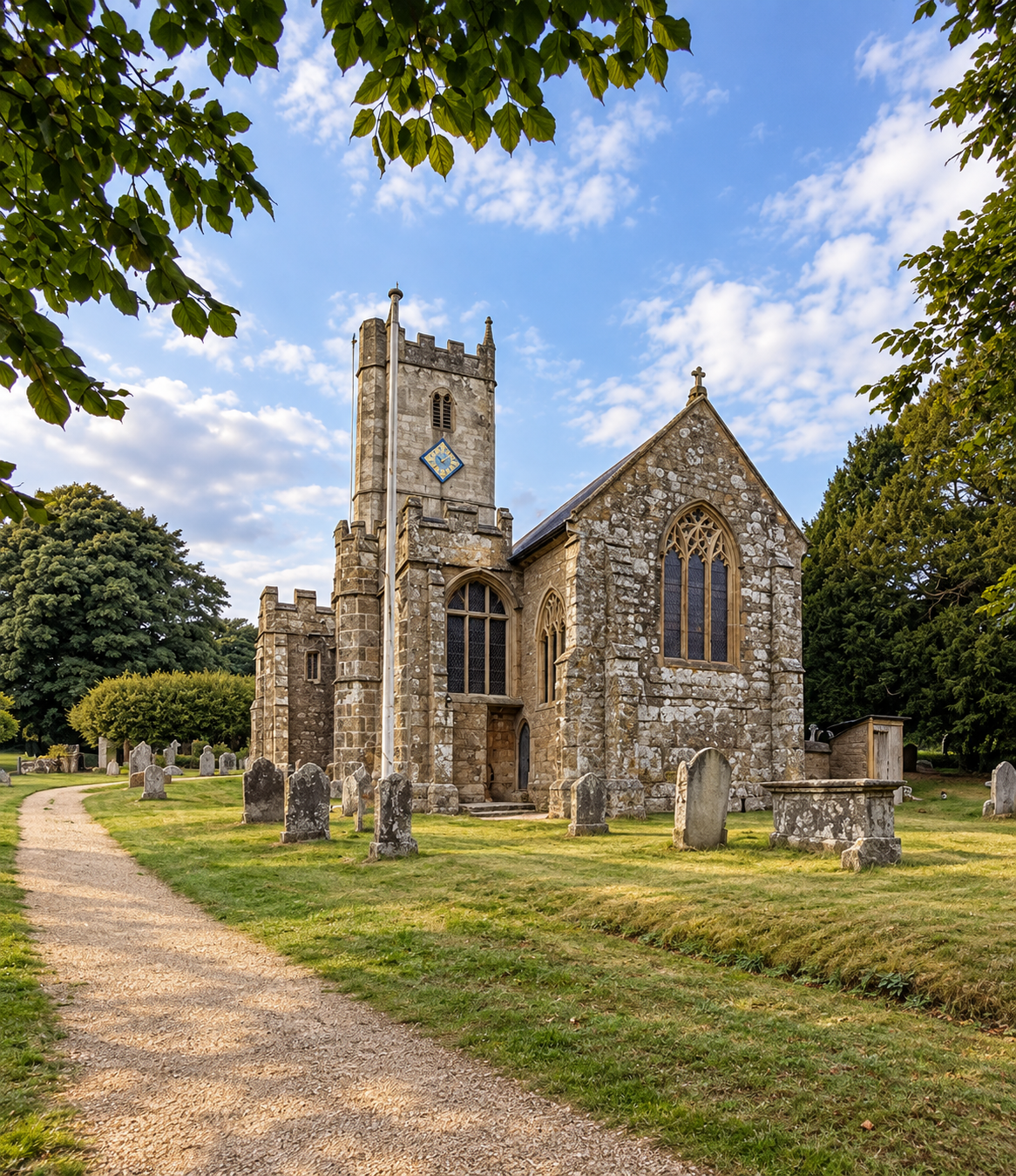
The church was enlarged during the fifteenth century with aisles and a west tower. The tower was badly damaged by lightning in 1779; falling masonry also damaged the chancel and destroyed much of the medieval glass. Fragments survived, however, and the building still contains evidence from several periods rather than presenting the appearance of a church created at a single date.
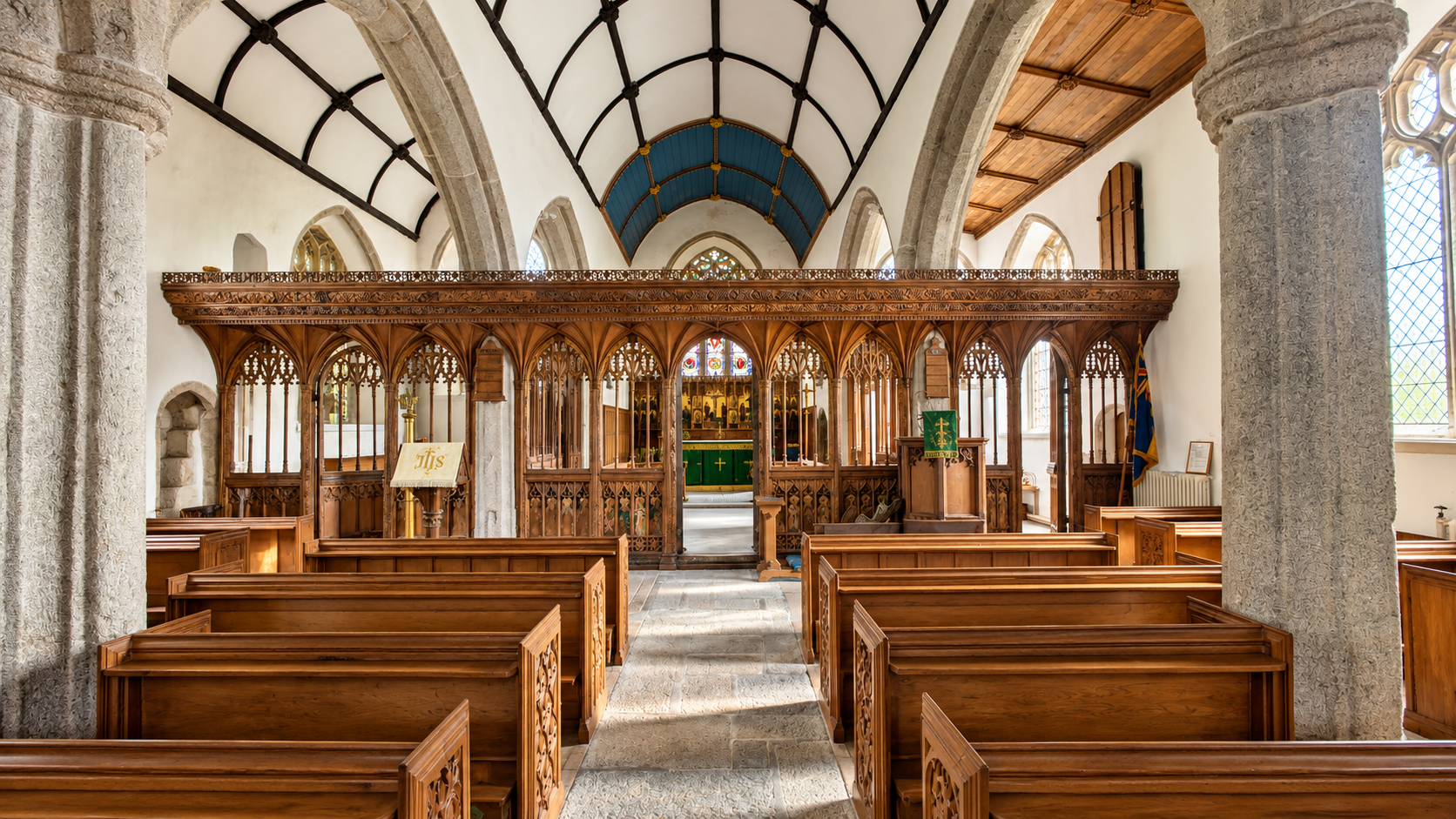
The medieval screen
Among the church’s most important survivals is its late-medieval rood screen. Screens divided the nave, occupied by the congregation, from the chancel around the altar. In many English churches medieval screens and their religious imagery were damaged or removed after the Reformation. At Manaton substantial medieval work survived and was subsequently restored.
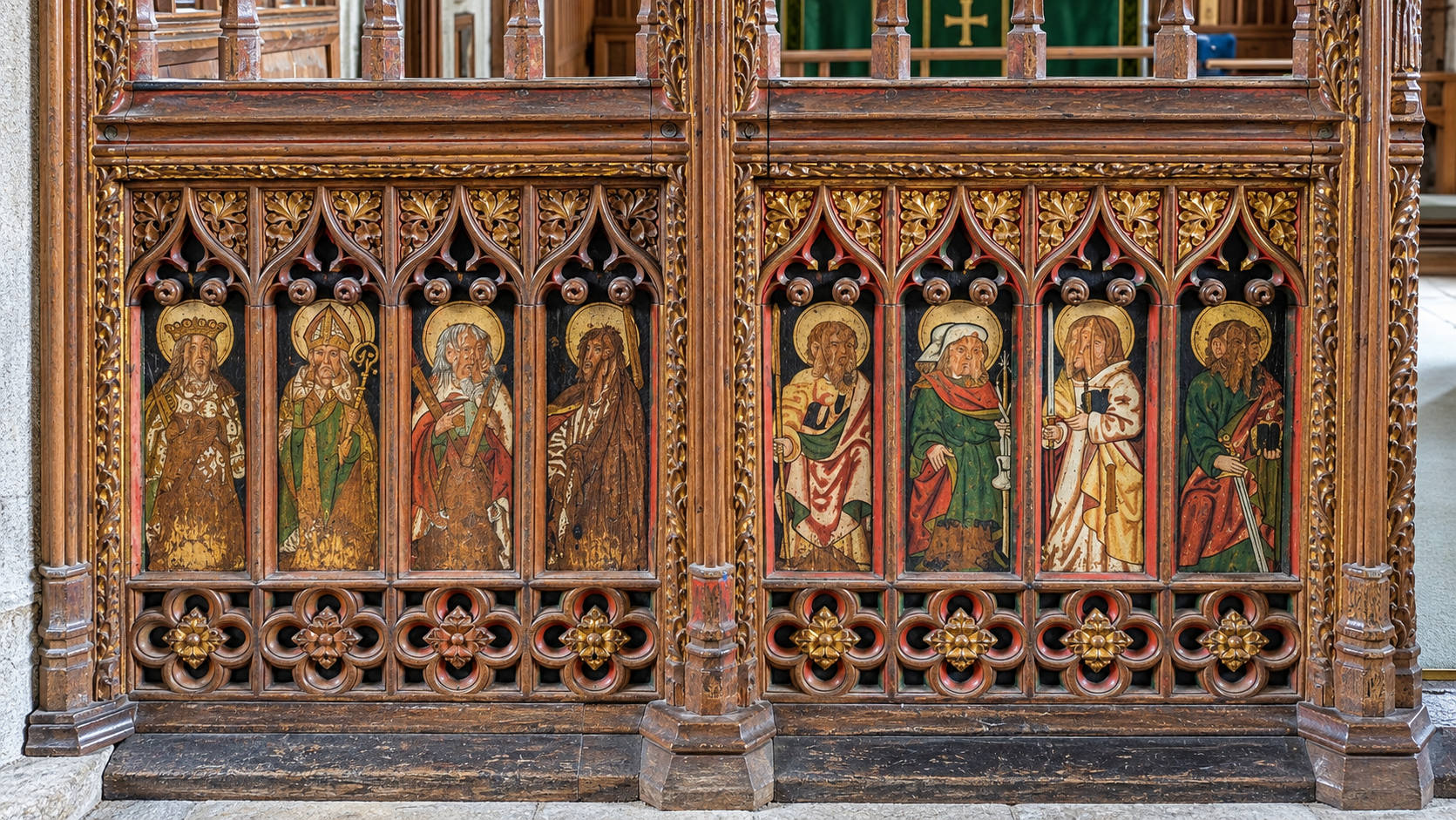
The church also preserves fragments of medieval stained glass and a remarkable collection of monuments. Together they turn the building into a record of the parish: clergy, landowners and families who lived around Manaton remain visible through inscriptions, arms and memorials long after the houses and farms in which they lived have changed.
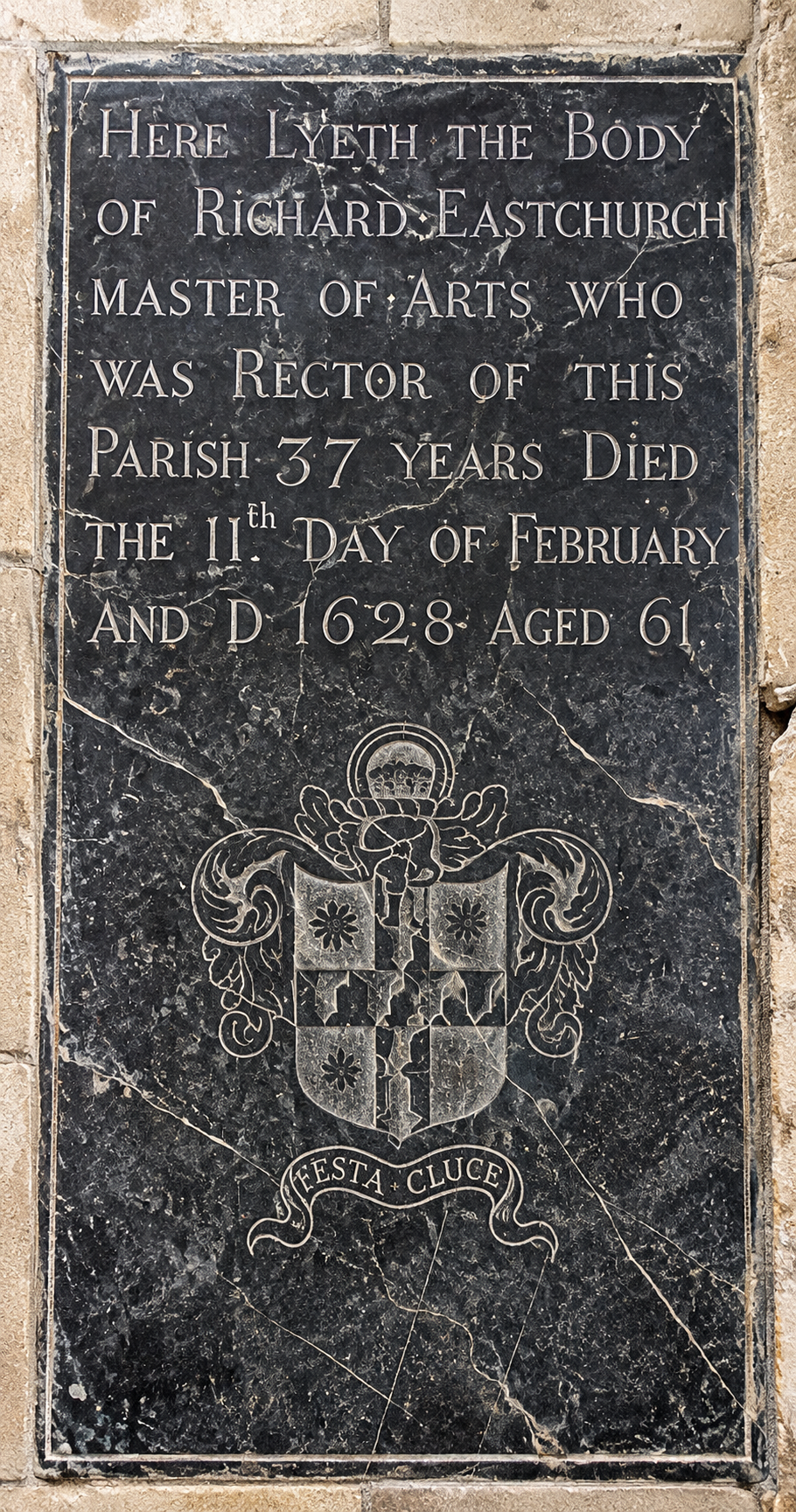
Richard Eastchurch
One of the most striking memorials commemorates Richard Eastchurch. The inscription records that he was rector of Manaton for thirty-seven years and died on 11 February 1698, aged sixty-one. Such a memorial supplies something that a list of rectors cannot: a direct physical connection with an individual who served this small Dartmoor parish for much of his adult life.
A church within a working village
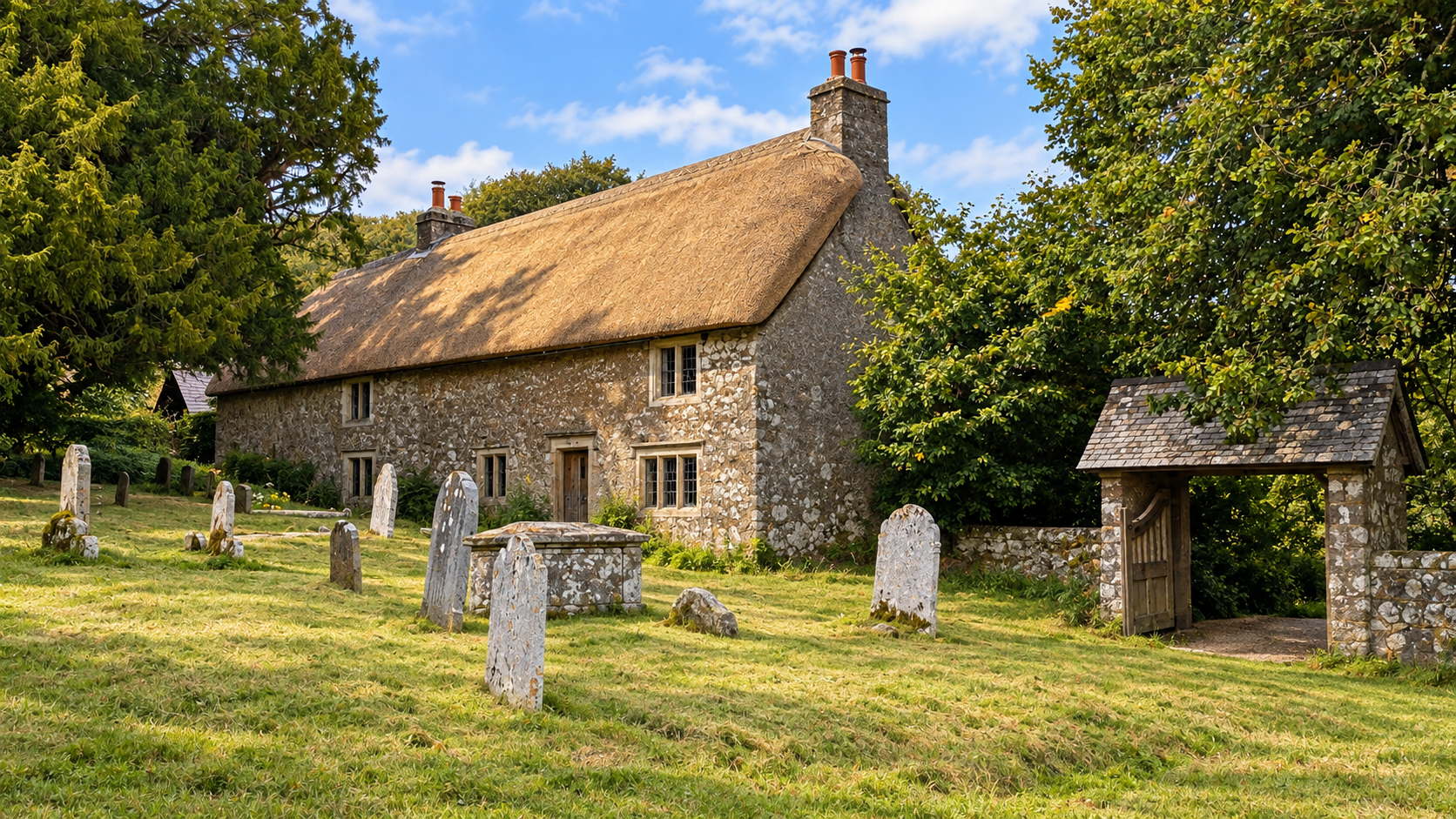
The churchyard, old houses and lanes around St Winifred’s are as important to the historical picture as the church interior. The parish church was not an isolated monument: it stood within a community whose life depended on farming, livestock and access across difficult country. Buildings, boundaries and paths developed together over centuries.
North Bovey
North Bovey developed around a broad village green on the eastern side of Dartmoor. Historic England considers that the settlement probably began to take its recognisable form in the fifteenth century, with farmhouses and cottages loosely arranged around the green. A number of early buildings survive, particularly around its southern end, so the present village still preserves much of the relationship between church, houses, inn and communal open space.
The green itself was part of everyday village life rather than merely an attractive open space. The old pump and granite trough recall the period before piped domestic water, while the cross marks a much older religious and travelling tradition. Together these features make the centre of North Bovey an unusually readable example of a Dartmoor village whose history remains visible in its layout.
St John the Baptist’s Church
The parish church of St John the Baptist stands immediately beside the green. Its chancel dates from the thirteenth century, while most of the remainder is fifteenth-century, with later restoration. The interior retains a fifteenth-century rood screen, sixteenth-century bench ends and carved roof bosses. One of the bosses bears the well-known three hares motif associated with several Dartmoor churches.
The church also preserves evidence of the practical business of maintaining a parish church. In 1500 the parishioners bought a bell from Robert Russell, an Exeter bellfounder, and the transaction subsequently became the subject of legal proceedings. The ancient bells were later recast; in 1813 a ring of four was converted into one of six. Details such as these show the church not simply as a medieval building but as an institution continually altered and maintained by the community around it.
The village cross
The granite cross on North Bovey green has a particularly interesting history. It is medieval, but it is almost certainly not the cross which originally occupied its present socket stone. The surviving shaft was found in the early nineteenth century serving as a footbridge across a stream below the village and was brought to the green in 1829. Its dimensions do not fit the ancient socket beneath it.
The result is a historical puzzle assembled from two old objects: a medieval socket which remained on the green and a medieval wayside cross recovered from elsewhere. The Devon Historic Environment Record notes that remains of the original cross may survive in a nearby wall. What appears at first to be a single monument therefore records both medieval route-marking and nineteenth-century efforts to recover and preserve local antiquities.
Crosses and old routes
The North Bovey cross belongs to a wider Dartmoor tradition. Medieval wayside crosses could affirm the Christian faith, but they also served the very practical purpose of guiding travellers across difficult and sparsely marked country. North of the village, Hospit Cross — also known as Bovey Cross or Horspit Cross — stands at an old crossroads and later acquired incised directional letters.
For cyclists these survivals are particularly revealing. The old lanes, junctions and crosses show how movement through the landscape was organised long before numbered roads and modern signs. The cross on the green, Hospit Cross and the network of lanes around North Bovey are therefore parts of the same historical landscape.
Two Dartmoor villages
Manaton and North Bovey have much in common. Both developed where settled agricultural country meets the harsher ground of Dartmoor, and both preserve medieval churches at the centre of communities which continued to change around them. Yet they tell their stories differently. At Manaton, monuments, glass and the history of local families provide an unusually personal record. At North Bovey, the green, church, cross, pump and surrounding buildings preserve the physical arrangement of the old village itself.
Riding between them links those histories through the landscape that shaped both communities. The steep valleys and high ground make this a demanding route, but they also explain why settlements, tracks, crossings and places of worship developed where they did.
Sources & Further Reading
- Historic England — Church of St John the Baptist, North Bovey, List Entry 1097172.
- Historic England — North Bovey Village Cross, Scheduled Monument 1009179 and List Entry 1334218.
- Devon & Dartmoor Historic Environment Record — Cross on the green, North Bovey (MDV8729).
- Devon & Dartmoor Historic Environment Record — St John the Baptist, North Bovey (MDV8732).
- Devon & Dartmoor Historic Environment Record — Hospit/Bovey Cross (MDV8725).
- Dartmoor National Park Authority — North Bovey Conservation Area Character Appraisal.
- Manaton Parish Council and local church records — history of Manaton and St Winifred’s Church.